

Customer Support
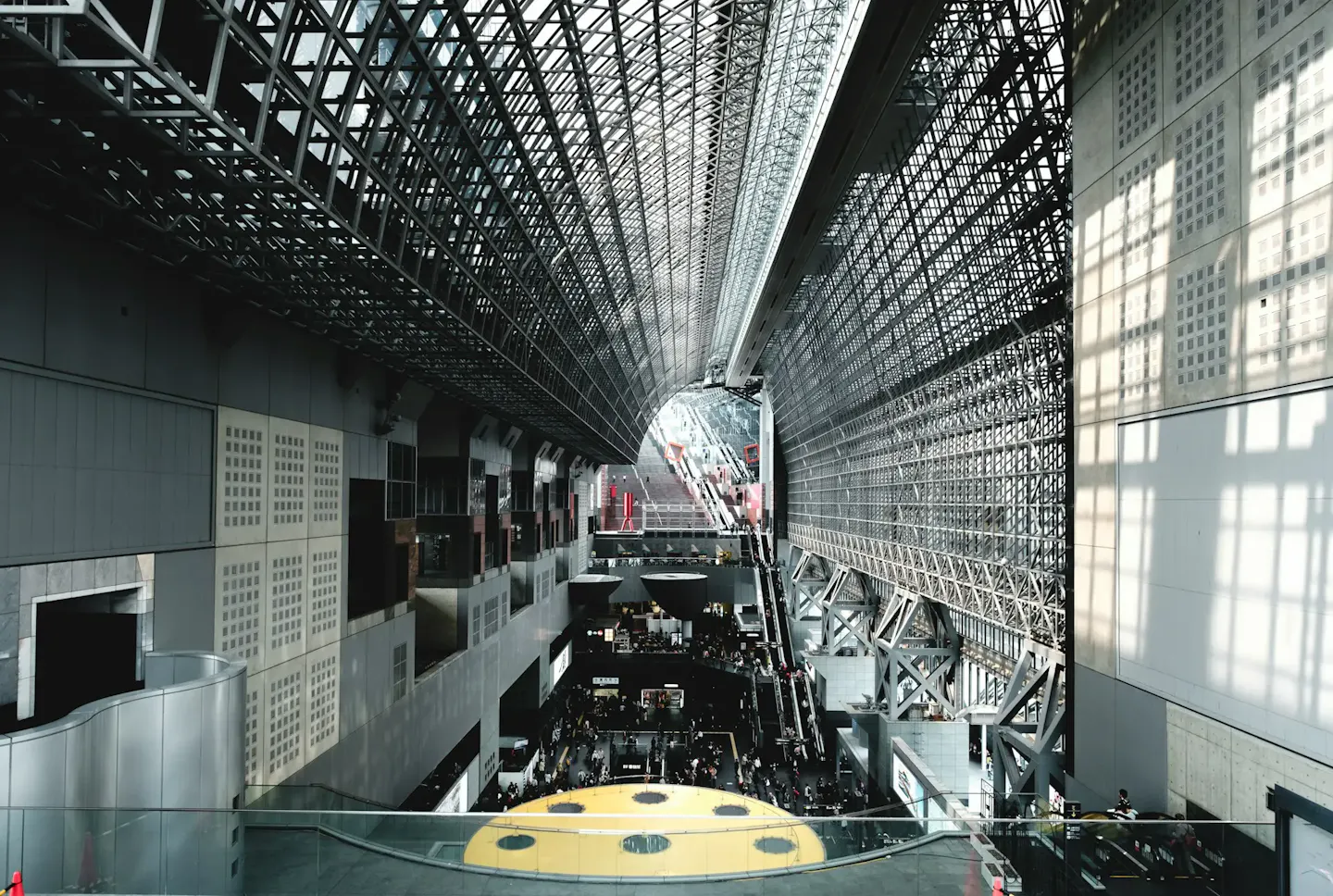
Not familiar with Kyoto Station? The station may look complicated, but understanding its layout and main areas makes it much easier to navigate. Here’s how to find the Shinkansen, make transfers, and get around with confidence.
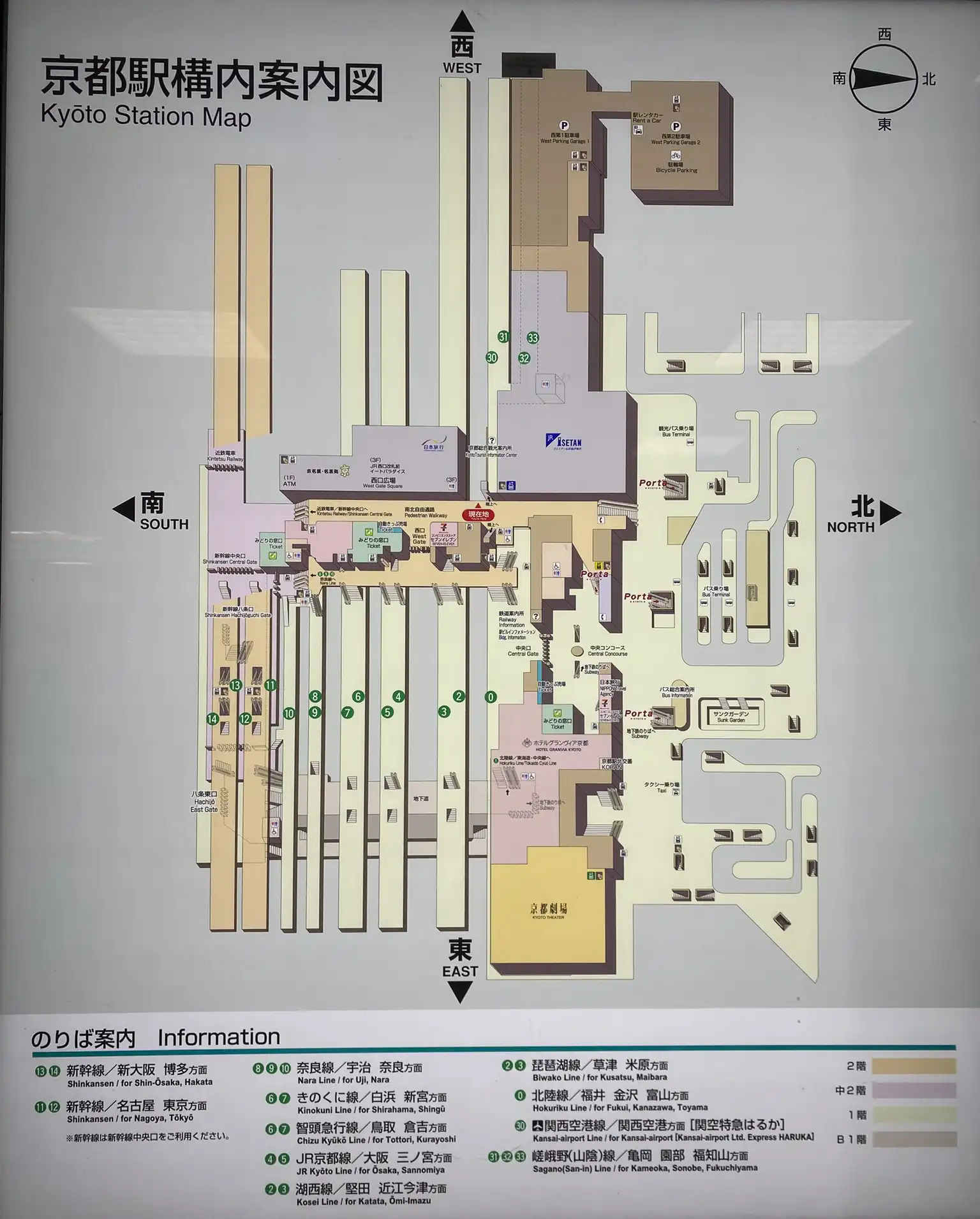
Kyoto Station is a large, multi-level station divided into Karasuma (north) and Hachijo (south) sides. The second-floor Pedestrian Walkway makes it easy to move between the two.
Level | Main Areas | Useful For |
3F | Shinkansen Platforms 11–14 | Boarding or arriving by Shinkansen |
2F | Shinkansen Central Ticket Gate and North-South Pedestrian Walkway | Shinkansen access and moving between Karasuma and Hachijo |
1F | Central Concourse and Shinkansen Hachijo-side gates | Entering or exiting the Shinkansen area from the Hachijo side |
B1F | Porta and B1F concourse | Shopping, dining, and moving through the underground station area |
B2F | Subway ticket gates and Underground Pedestrian Walkway | Accessing the Kyoto City Subway |
If you arrive at Kyoto Station on foot or by taxi, you will enter from either the Karasuma or Hachijo side. Check which side is more convenient for your next destination before entering the station.
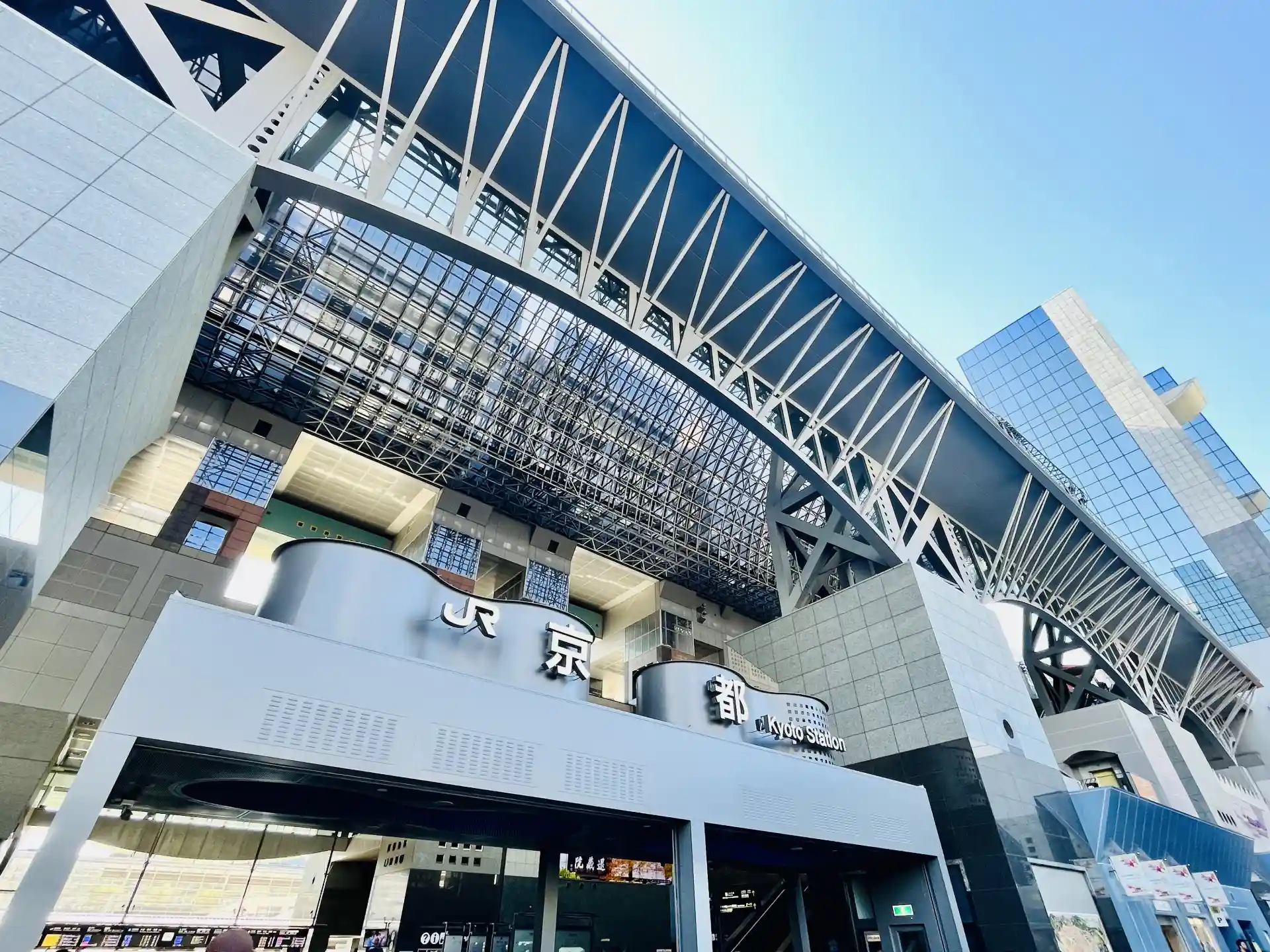
Karasuma is the north side of Kyoto Station and faces Kyoto Tower. Use this side for the main city bus terminal, Porta, or hotels around Kyoto Tower. The tower is also an easy landmark when you are trying to work out which side of the station you are on.
The Kyoto City Subway can also be reached from the Karasuma side. However, Karasuma is not the only way to access the subway.
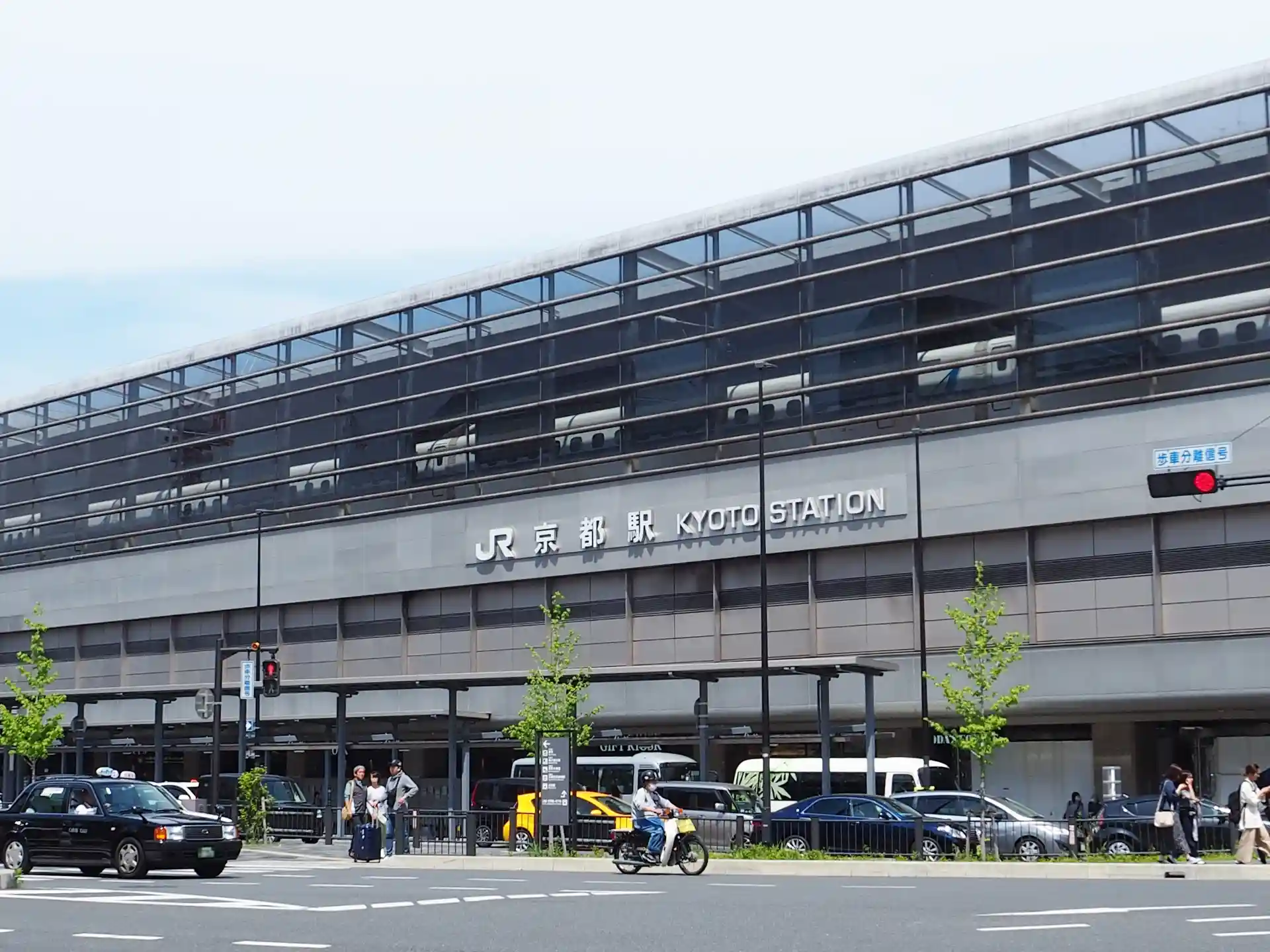
Hachijo is the south side of Kyoto Station and is the main side to know if you are using the Shinkansen or Kintetsu Railway. If either of these is your next train, head toward Hachijo.
If you are continuing by subway, you can also reach it from the Hachijo side via the underground passage. You do not need to cross to Karasuma first.
Use the North-South Pedestrian Walkway on the second floor to move between Karasuma and Hachijo without going outside.
This is useful if you exit on the wrong side or need to reach a facility on the opposite side. It also lets you avoid walking around the station building outside, which can be helpful with luggage or in bad weather.
For a more detailed view of the station, see the official Kyoto Station map from JR West (PDF).
From outside the JR paid area, use a dedicated Shinkansen ticket gate. For transfers from JR conventional lines, use a Shinkansen transfer gate instead. Shinkansen trains use Platforms 11–14, so the platform area is relatively straightforward.
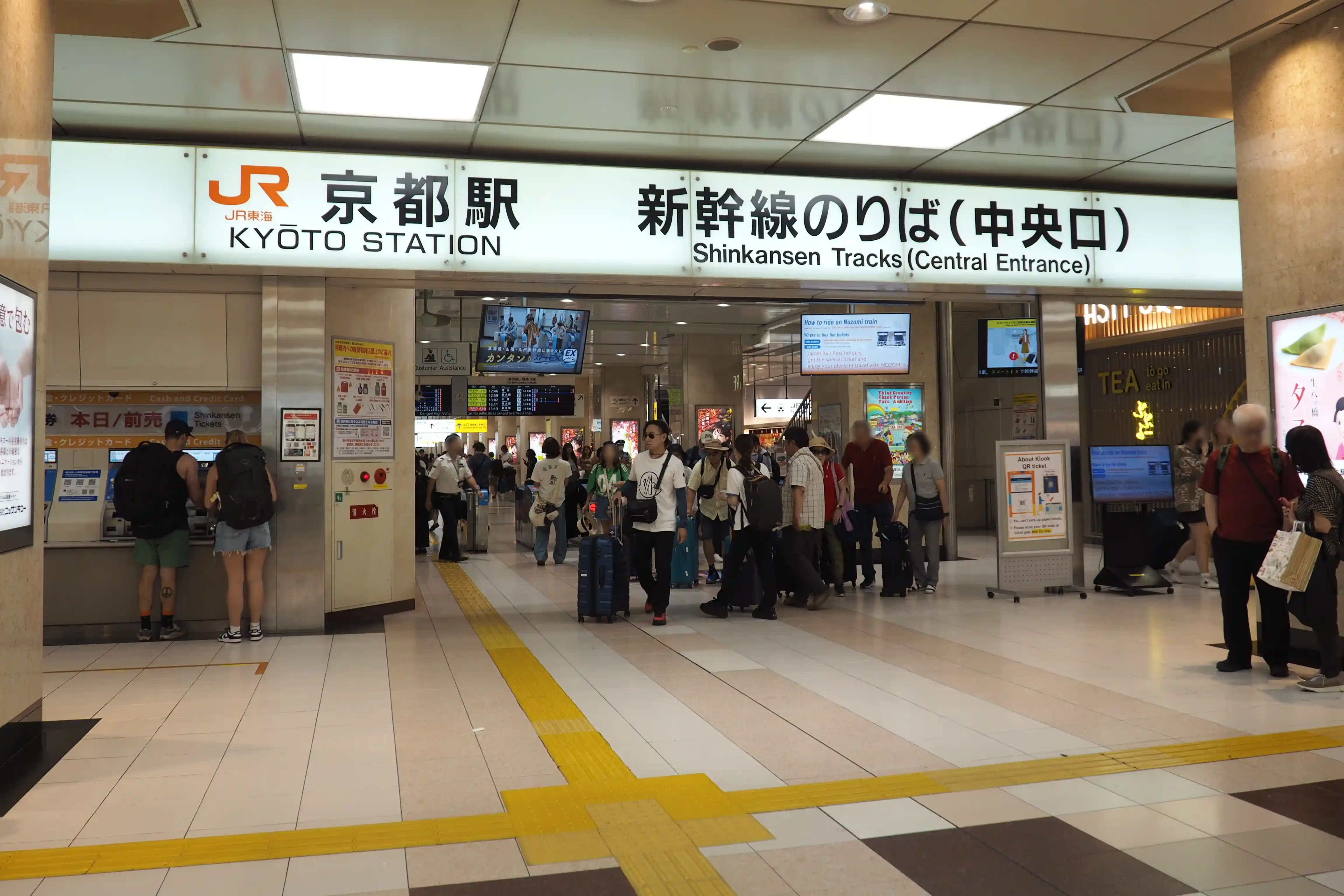
Kyoto Station has several Shinkansen ticket gates. Which gate to use depends mainly on whether you are entering from the Karasuma or Hachijo side, or transferring from a JR conventional line.
Gate Name | Floor | Best For |
Shinkansen Central Ticket Gate | 2F | Karasuma-side access or Kintetsu transfers |
Shinkansen Hachijo Ticket Gate | 1F | Hachijo-side access |
Shinkansen Hachijo East Ticket Gate | 1F | Eastern Hachijo-side access |
Shinkansen Central Transfer Gate | 2F | Transfers from JR conventional lines |
Shinkansen East Transfer Gate | 2F | Transfers from JR conventional lines |
The two transfer gates are inside the JR paid area, so use them when connecting from a JR conventional line without exiting the station. If you are entering from outside, use one of the regular Shinkansen ticket gates instead.
Don't confuse the “Central Ticket Gate” with the “Shinkansen Central Ticket Gate”. The Central Ticket Gate is for JR conventional lines on the Karasuma side, while the Shinkansen Central Ticket Gate is a separate gate on the second floor.
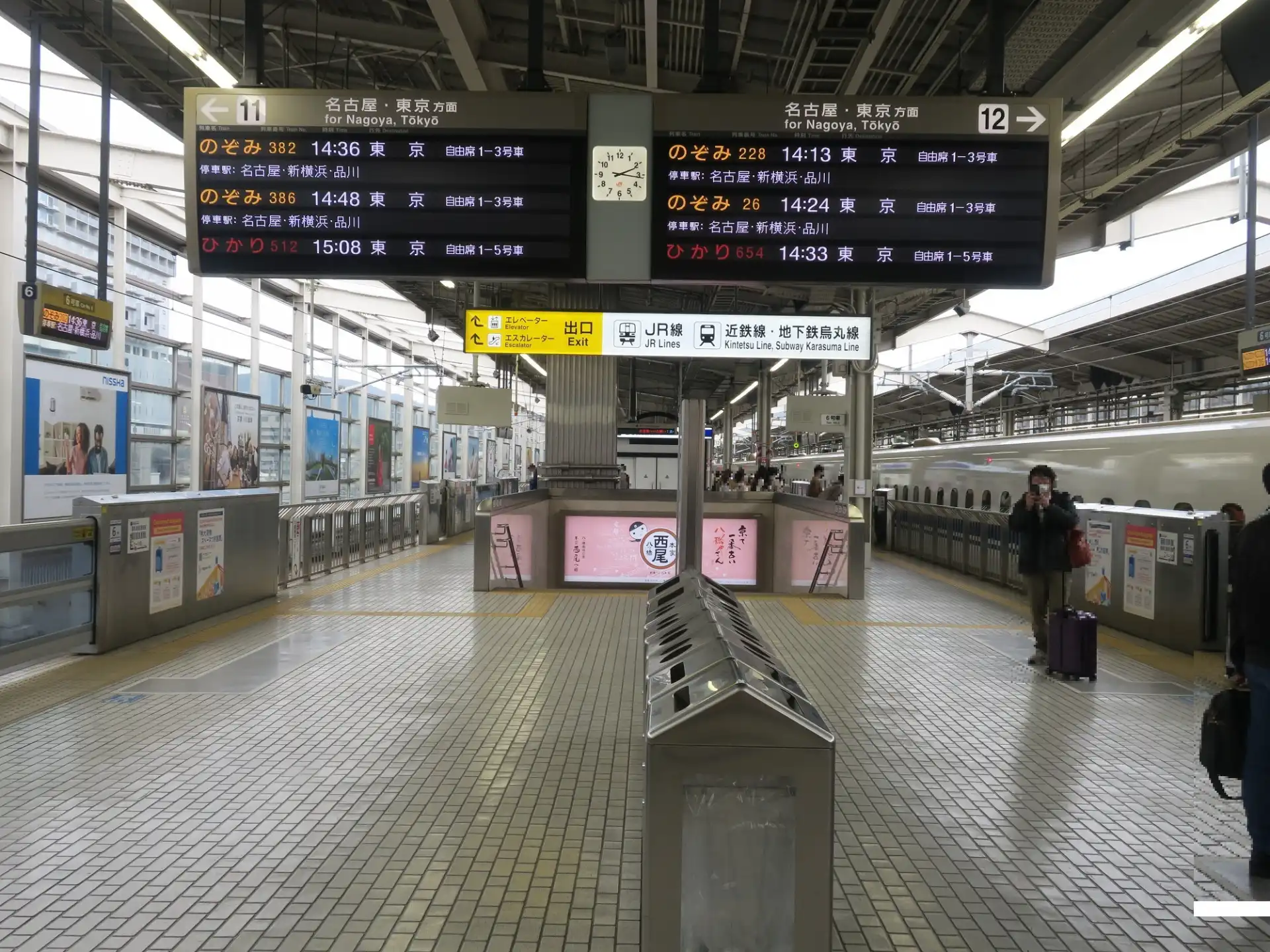
Eastbound trains use Platforms 11–12, while westbound trains use Platforms 13–14. Check the departure board for your platform number before heading to the platform.
Platforms | Direction | Example Destinations |
11–12 | Eastbound | |
13–14 | Westbound |
Eastbound and westbound trains use different platform groups, so checking the departure board first can save you from unnecessary backtracking.
▶ RELATED: Step-by-Step Kyoto Station Shinkansen Boarding Guide
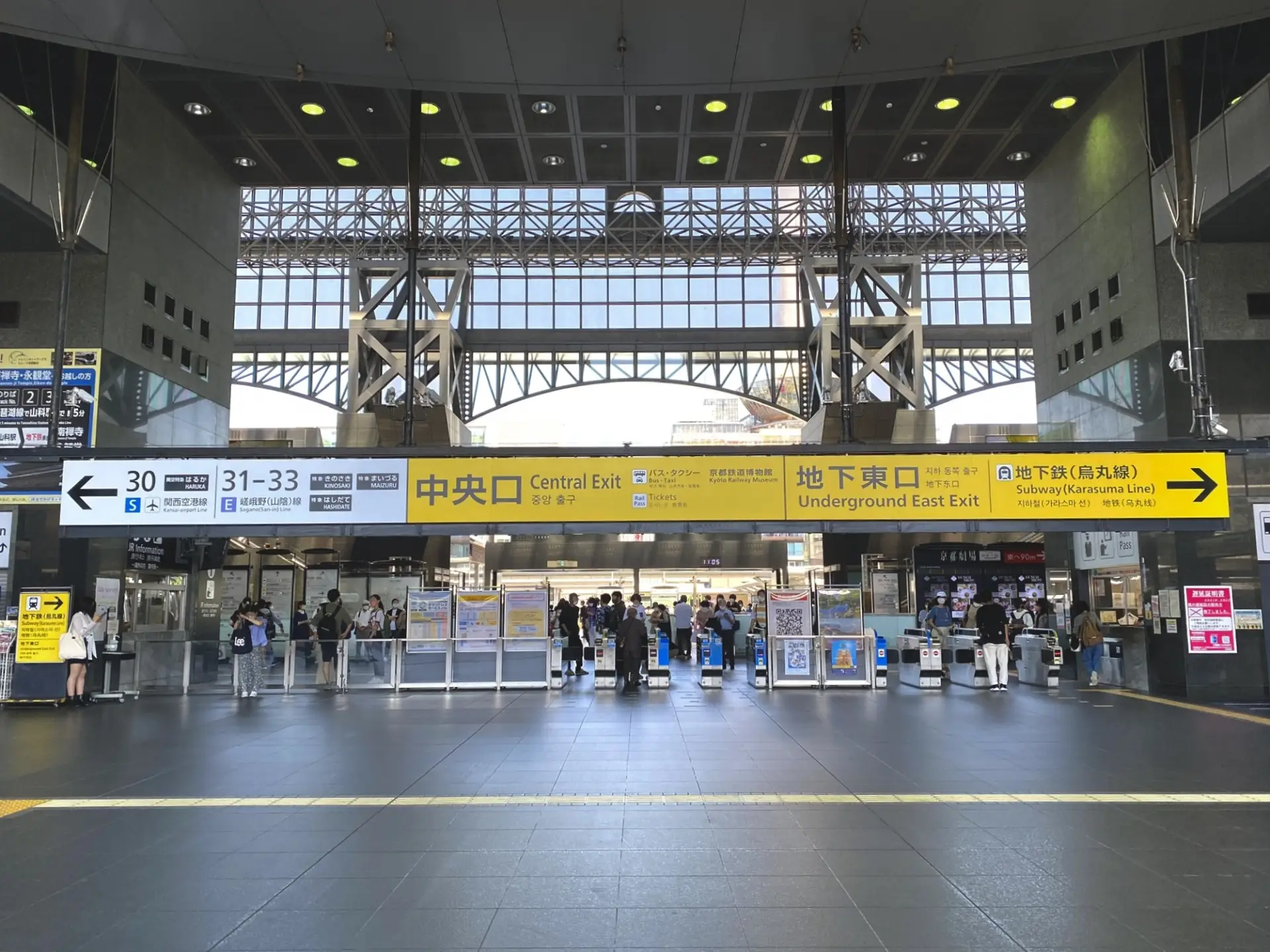
Kyoto Station serves JR, Kyoto City Subway, and Kintetsu trains, but they use separate ticket areas. When changing between different railway systems, you may need to exit one set of gates and enter another.
The main exception is transfers between the Shinkansen and JR conventional lines, where you can use a Shinkansen transfer gate.
JR conventional services use platforms separate from the Shinkansen concourse. For transfers between the Shinkansen and JR conventional lines, use a Shinkansen transfer gate.
Check the departure board for your train and platform before heading to the platform.
The Kyoto City Subway ticket gates are on B2F and can be reached from both the Karasuma and Hachijo sides. From Hachijo, use the underground passage to reach the subway.
The Karasuma Line serves Shijo and Karasuma Oike, where you can transfer to the Tozai Line.
The Kintetsu Railway is on the Hachijo side, near the Shinkansen area. It connects Kyoto Station with destinations such as Kintetsu-Nara and Kintetsu-Tambabashi.
Kintetsu-Nara Station is closer to Nara Park than JR Nara Station, making it a convenient option for sightseeing in Nara. The JR Pass is not valid on Kintetsu trains. If you want to use your JR Pass to travel to Nara, take the JR Nara Line instead.
City buses depart from the main bus terminal on the Karasuma side. Routes serve popular areas such as Gion and Kiyomizu-dera. Buses can be convenient for destinations without a nearby train or subway station, but popular routes can become crowded and be delayed by traffic. During busy periods, rail or subway connections may be more predictable for some destinations.
The bus terminal is on the opposite side from the Shinkansen, so allow time to walk across the station if you are transferring from a Shinkansen train.
Taxi stands are available on both sides of Kyoto Station. A taxi can be a convenient option if you have heavy luggage or are traveling with a group.
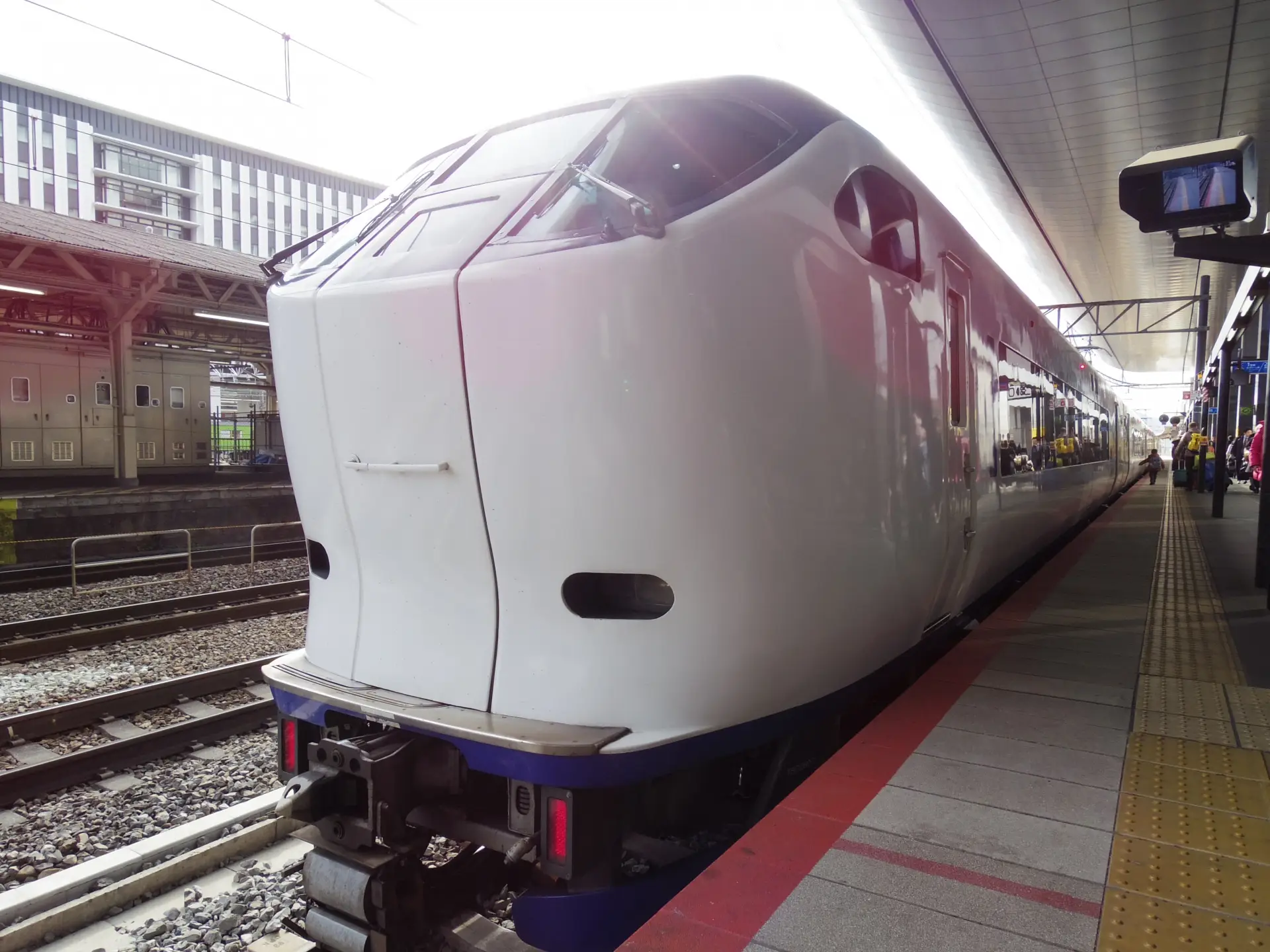
For Kansai International Airport, the JR Haruka provides a direct rail connection from Kyoto Station. Airport limousine buses also depart from Kyoto Station Hachijo-guchi. Haruka trains can use Platforms 6, 7, or 30, so check the departure board for your train.
For more details, see our Kansai International Airport guide.
Kyoto Station has coin lockers and staffed baggage services on both the Karasuma and Hachijo sides. Locker availability changes throughout the day, so check the current status before walking to a specific area.
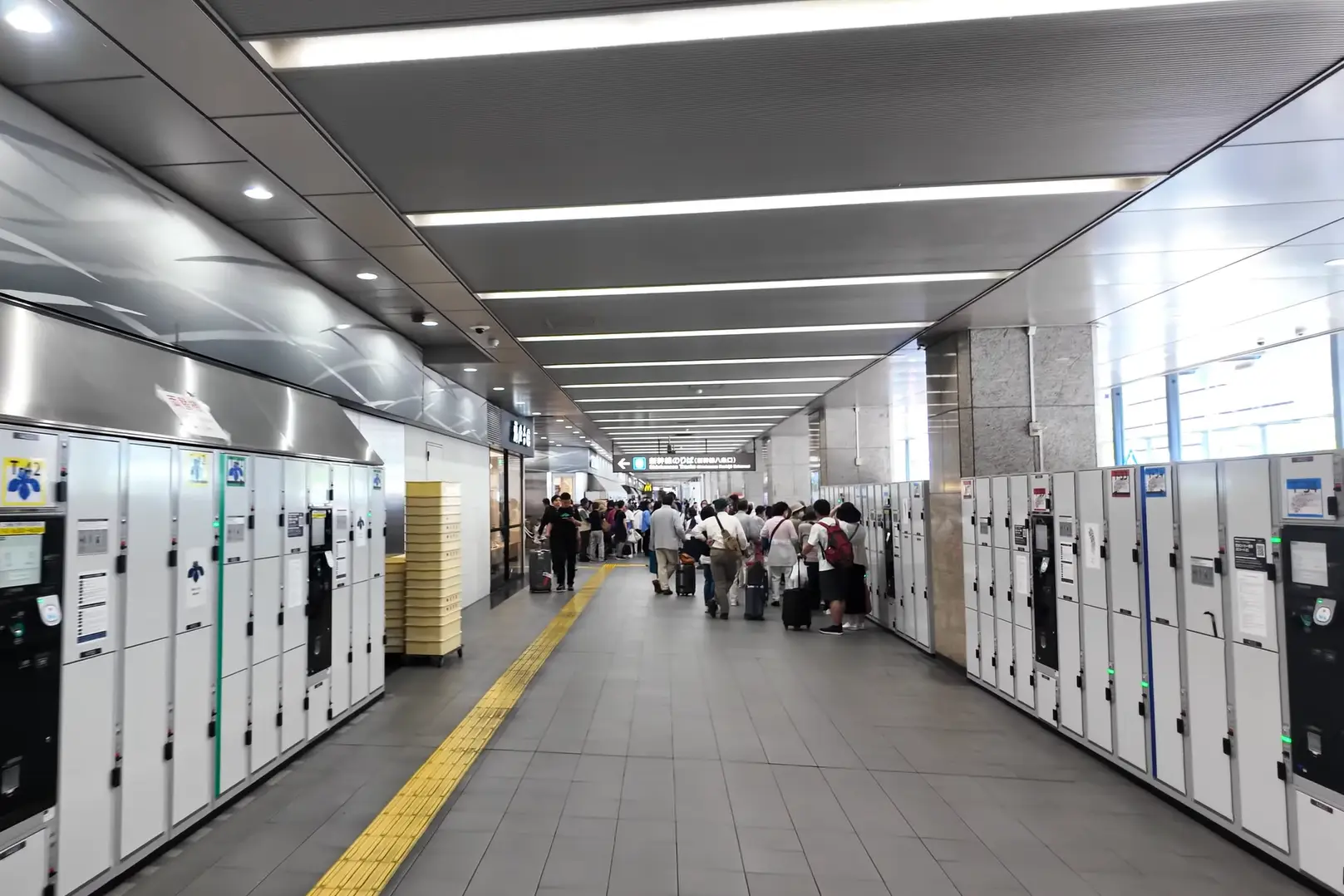
Coin lockers are available both inside and outside the ticket gates. Lockers outside the paid areas are useful if you want to store luggage before entering the station.
Main areas to check include:
Most lockers accept both IC cards and cash.
Large suitcases are easiest to store on the Hachijo (South) side, where extra-large lockers are more common. Lockers fill up quickly on busy days, so check the south side first.
If everything is full, use the station’s staffed luggage storage services.
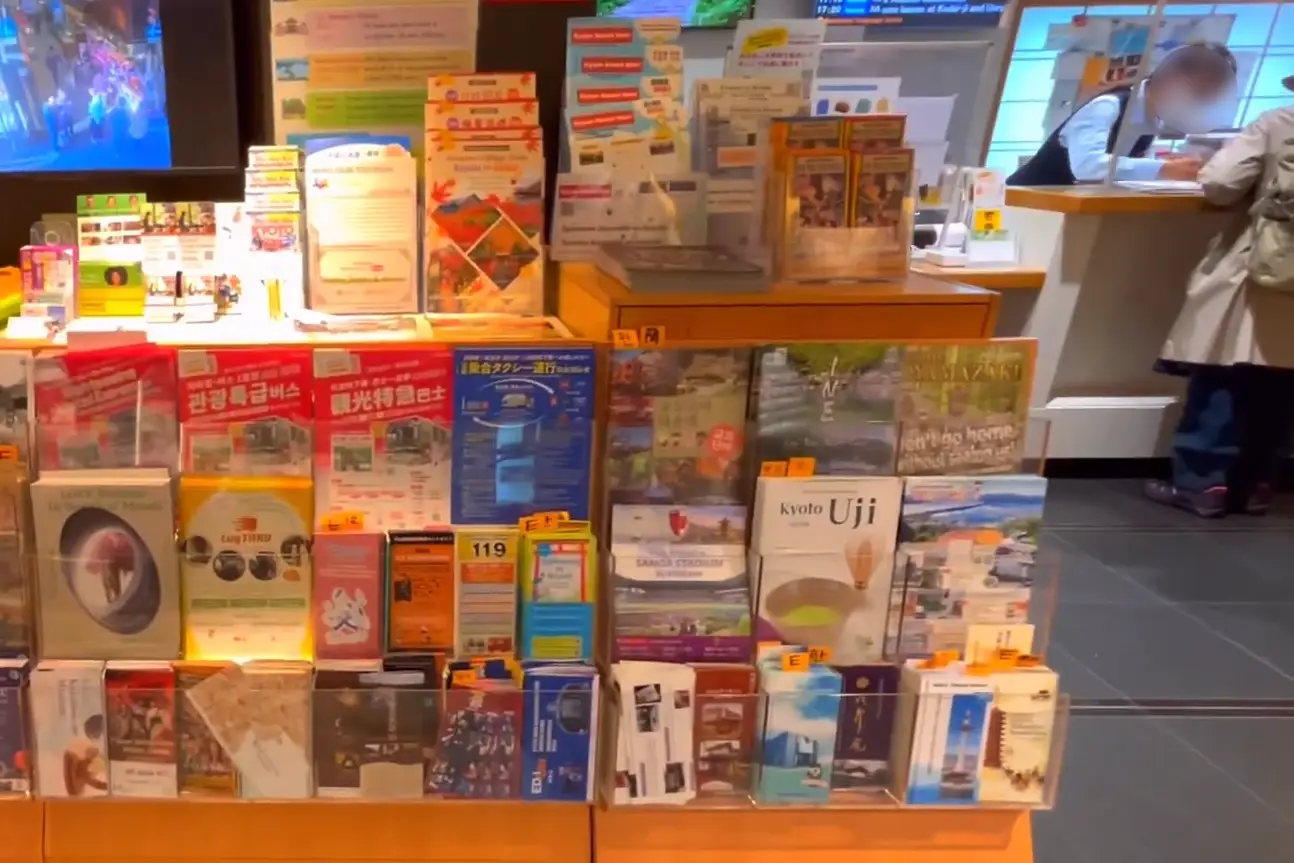
Kyoto Tourist Information Center “Kyo Navi” is on the second floor along the North-South Pedestrian Walkway. Its multilingual staff can provide maps, event information, and transit guidance.
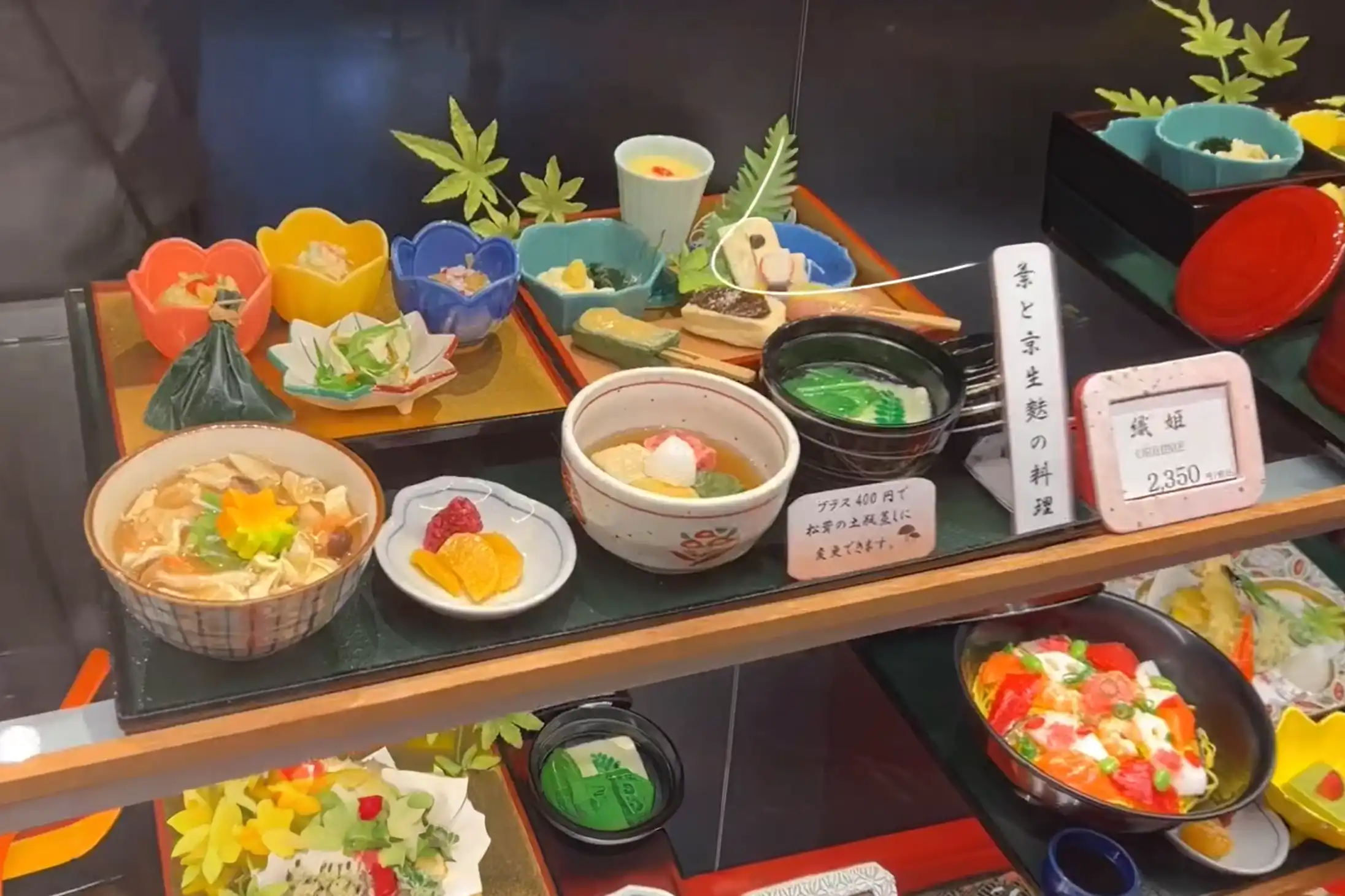
Kyoto Station has plenty of places to eat, shop, and spend time before your train. Most are inside the station building or directly connected to it, so you do not need to go far between connections.
Area | Location | What You'll Find / Useful For |
Kyoto Ramen Koji | 10F, Station Building | A ramen area featuring well-known shops from across Japan |
Porta | B1, Karasuma side | An underground mall with restaurants, cafes, shops, and souvenirs |
JR Kyoto Isetan | Karasuma side | A department store with restaurants, shopping, and a large food hall |
Kintetsu Miyakomichi | 1F, Hachijo side | Restaurants and souvenir shops, convenient while waiting for the Shinkansen |
If you are waiting for a Shinkansen, Kintetsu Miyakomichi is especially convenient because it is on the Hachijo side, close to the Shinkansen area.
Worth a short visit:
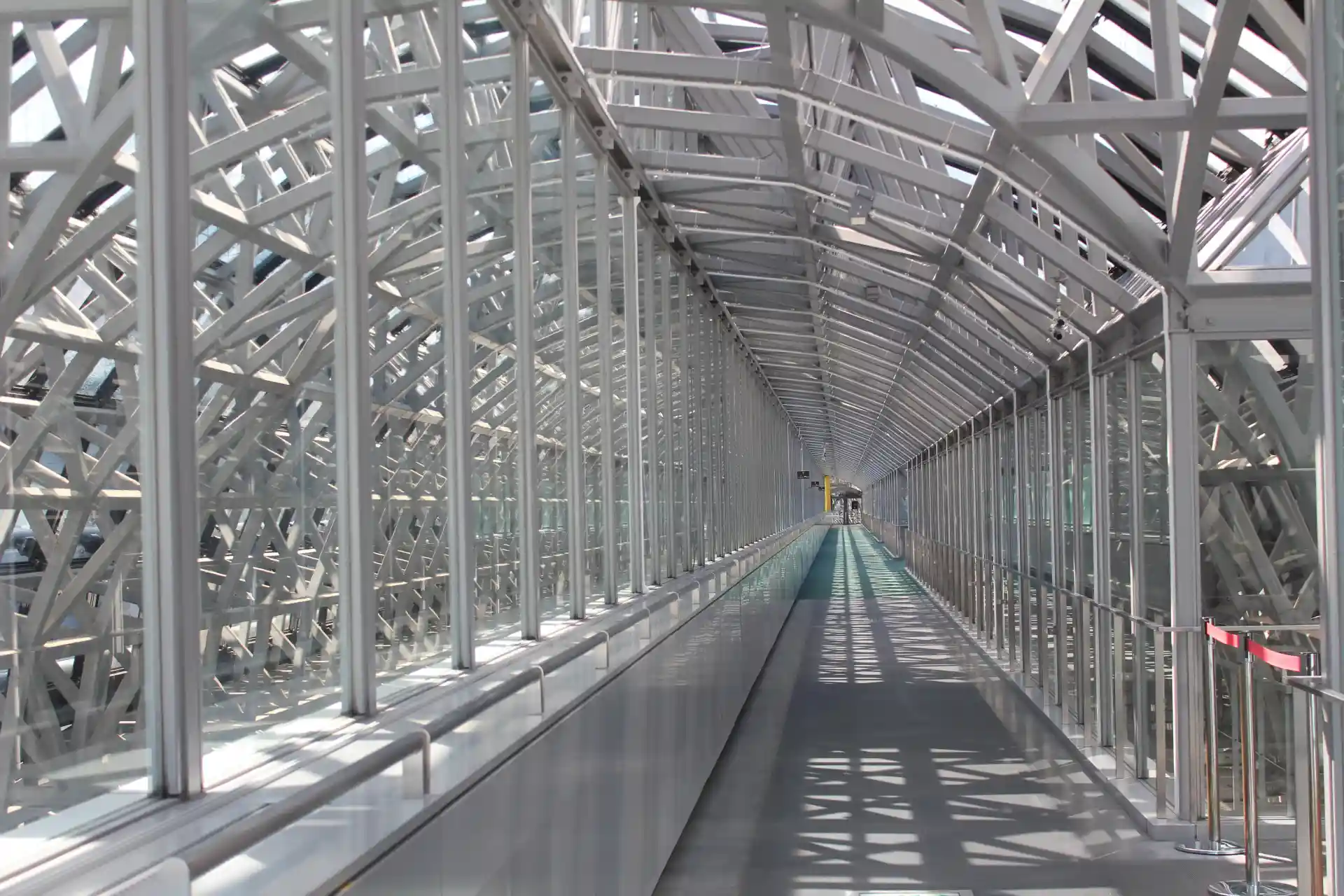
Skyway: This 185-meter aerial corridor on the 10th floor connects the west and east sides of the Kyoto Station building. Located 45 meters above ground, it offers panoramic views over northern Kyoto.
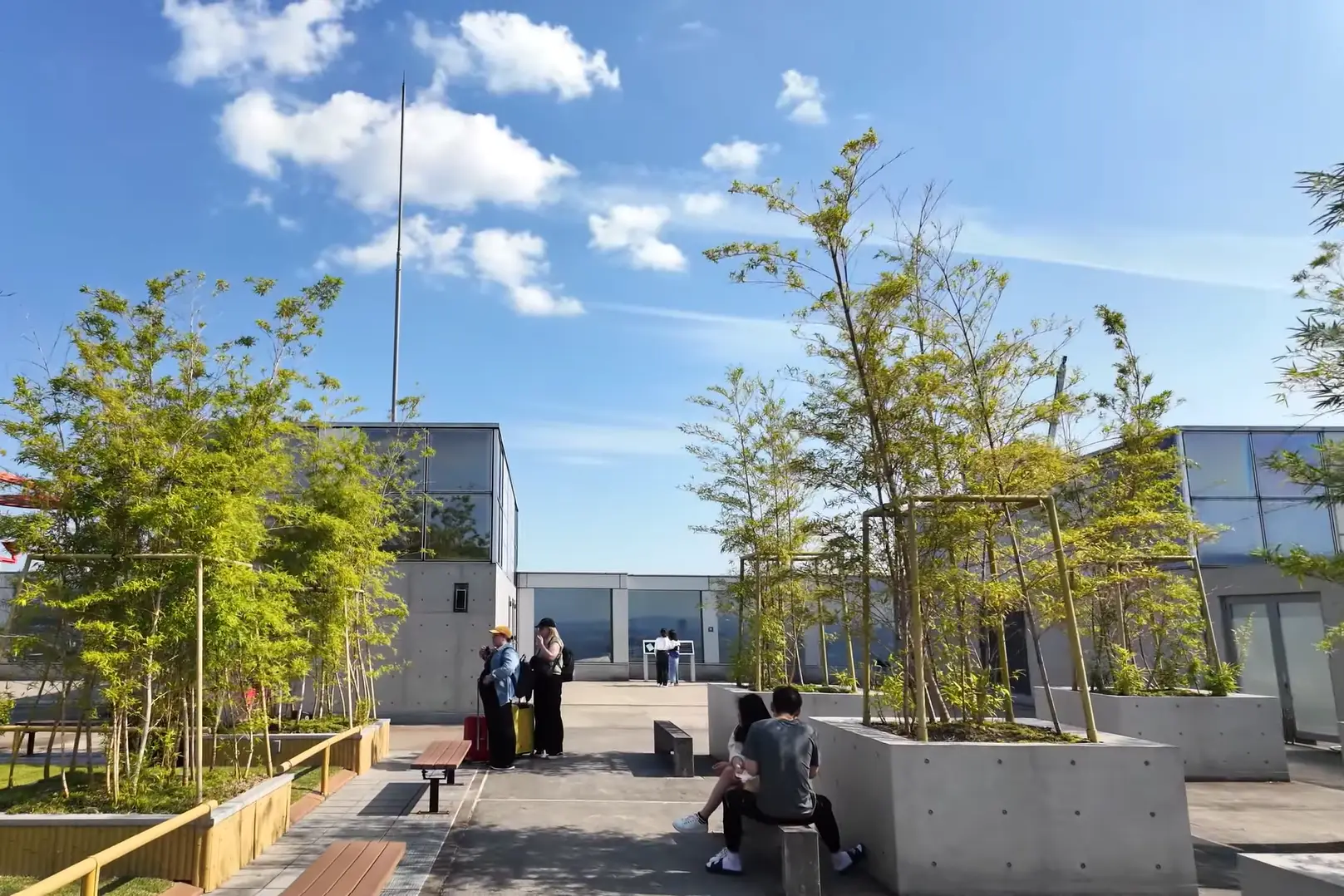
Grand Staircase: This 171-step staircase leads to Sky Plaza Happi Terrace, a rooftop garden and rest area with city views.
Kyoto Station may feel complex at first, but knowing the Karasuma and Hachijo sides, where the Shinkansen area is, and how the main connections are arranged makes it much easier to navigate. Once you know where to go, you can move through the station with confidence and focus on your journey.
From Kyoto, the Shinkansen takes you east toward Nagoya and Tokyo or west toward Shin-Osaka, Hiroshima, and beyond. Whether Kyoto is the start of your trip or one stop along the way, the station is an easy gateway to your next destination once you understand the layout.
If you are taking the Shinkansen from Kyoto Station, you can book your ticket online with Japan Bullet Train before you travel. It is an online Shinkansen ticket booking service designed for international travelers visiting Japan. Its multilingual website and Japan-based customer support team can assist travelers in English, Chinese, Korean, and other languages.