
Hakata Station in Fukuoka: Shinkansen, Map, Platforms, Shopping and Food Guide
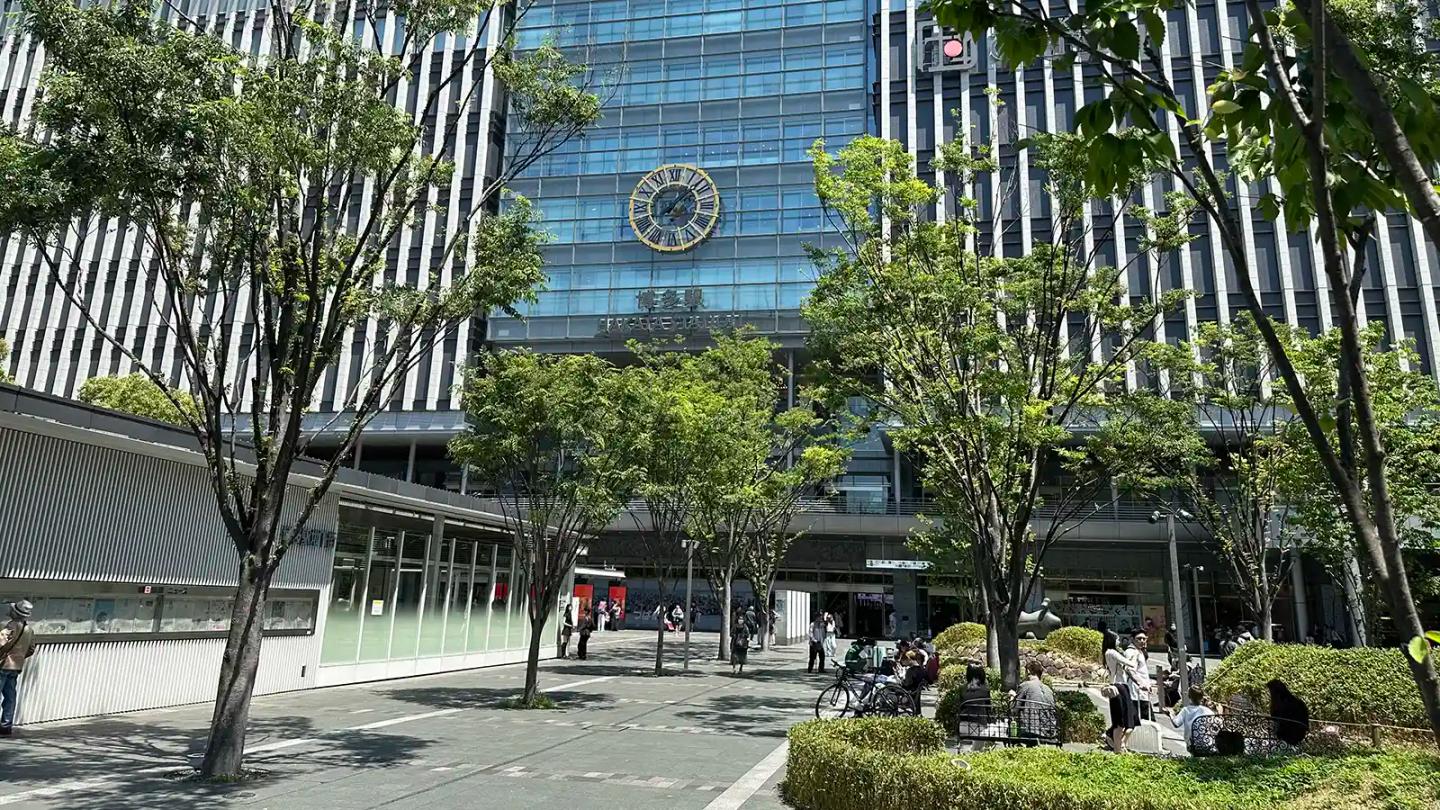
Hakata Station is the main hub in Kyushu, but knowing where to go can make your trip much smoother.
This guide explains how to find the Shinkansen gates, choose the right exit, and move around the station with ease.
What Is Hakata Station
Some travelers search for “Fukuoka Station” when looking for the main hub in Kyushu, but it is actually called “Hakata Station.” Let’s take a quick look.
Hakata vs Fukuoka
Hakata Station is the main Shinkansen terminal in Fukuoka.
In 1889, the former cities of Hakata and Fukuoka were merged to form Fukuoka City, but the station kept the name “Hakata.” Today, the names refer to closely related areas: Hakata is the station and surrounding district, while Fukuoka is the city name.
Key Facts
- Shinkansen lines: Sanyo Shinkansen, Kyushu Shinkansen
- Airport: 5 min by subway (Kuko Line)
- Complex: JR Hakata City — shopping, dining, rooftop garden
Hakata Station Layout and Exits
The station has two main exits. Choosing the right one can help you get around more easily. For Shinkansen passengers, the Chikushi Exit is usually the most convenient.
Hakata Exit (West Side)
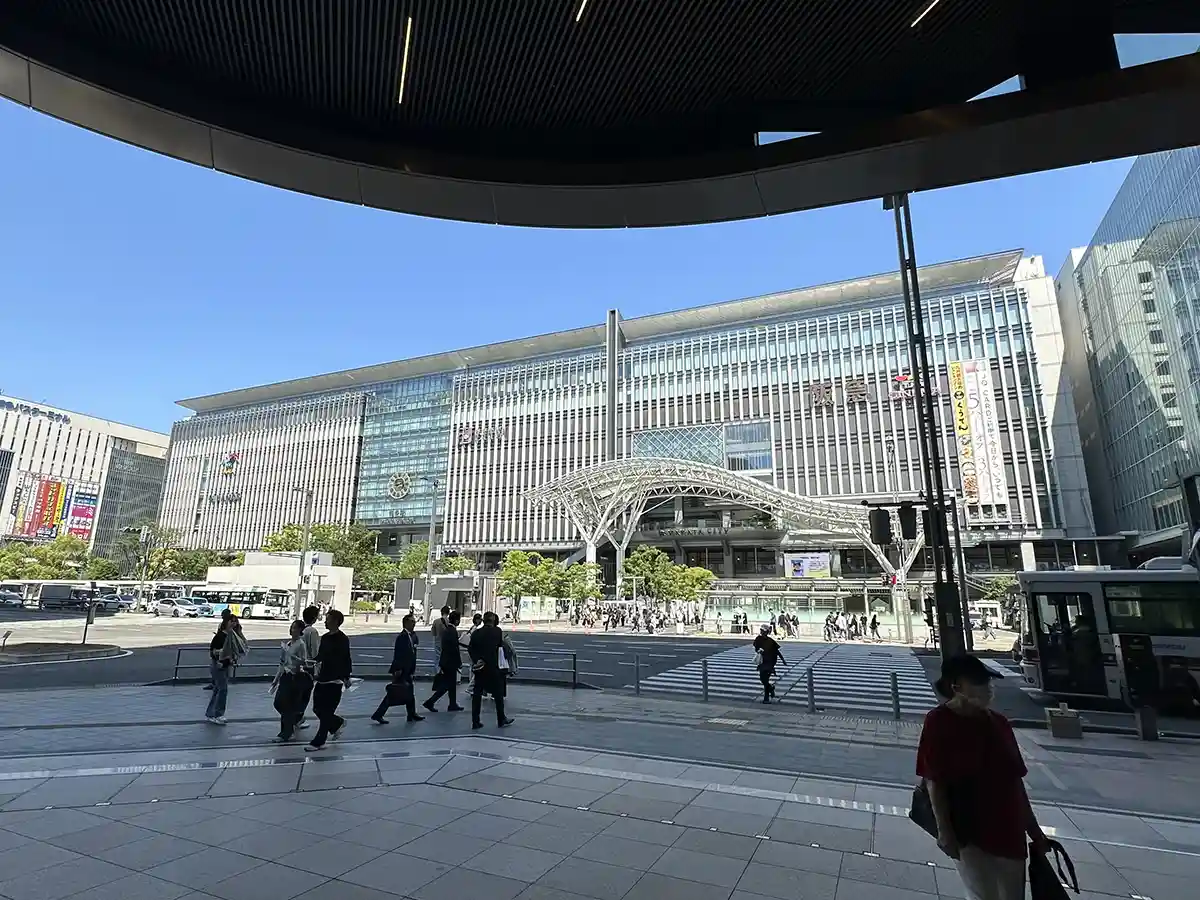
The Hakata Exit faces west. It connects to department stores, Canal City Hakata, and the Nakasu area.
Chikushi Exit (East Side)
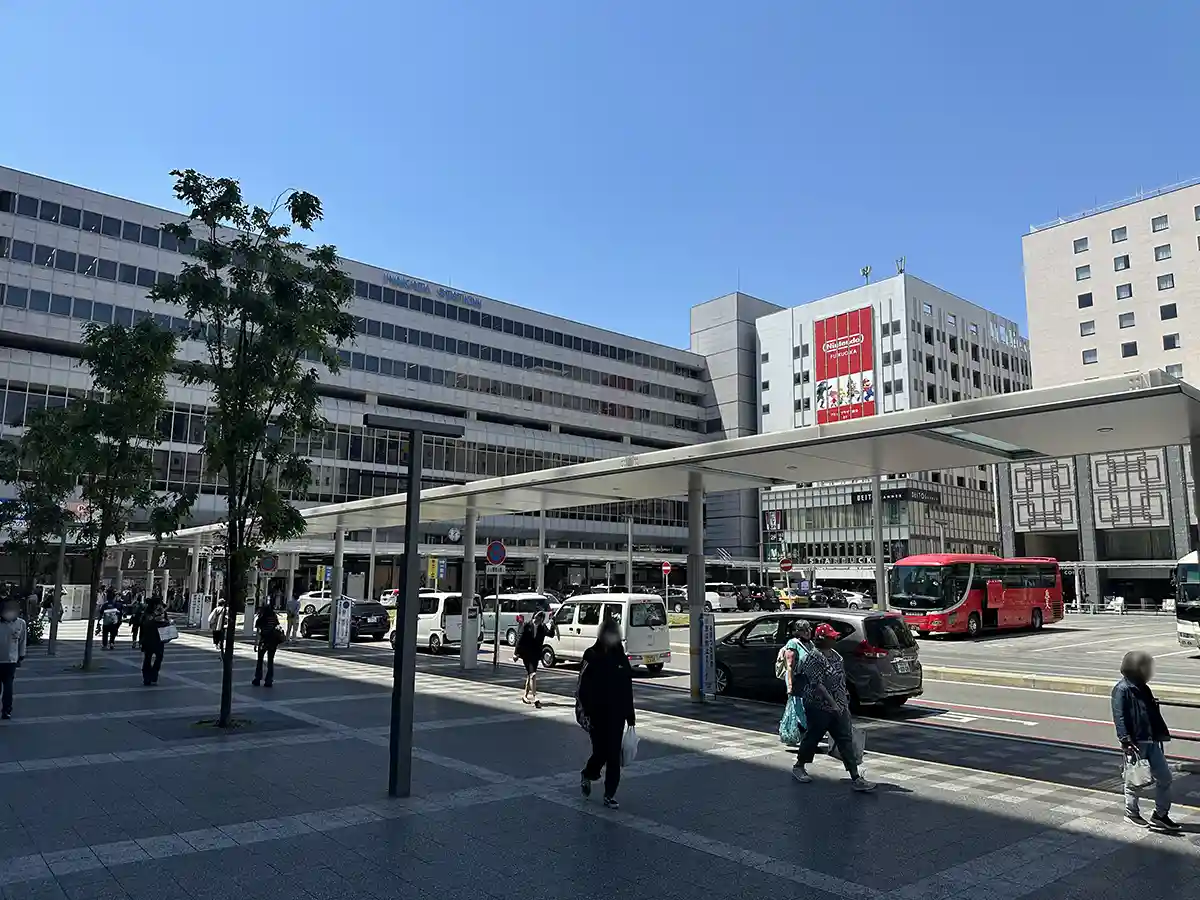
The Chikushi Exit is on the east side, leading to hotels and rental car counters. The Shinkansen ticket gates are closest to this side.
Which Exit to Use for Shinkansen
Exit | Direction | Key Feature |
Hakata Exit | West | Canal City, Nakasu, Buses, Subway, Major Shopping |
Chikushi Exit | East | Shinkansen Gates, Taxi Stand, Hotels, Rental Cars |
For a detailed station layout, see the official JR West station map.
Shinkansen at Hakata Station
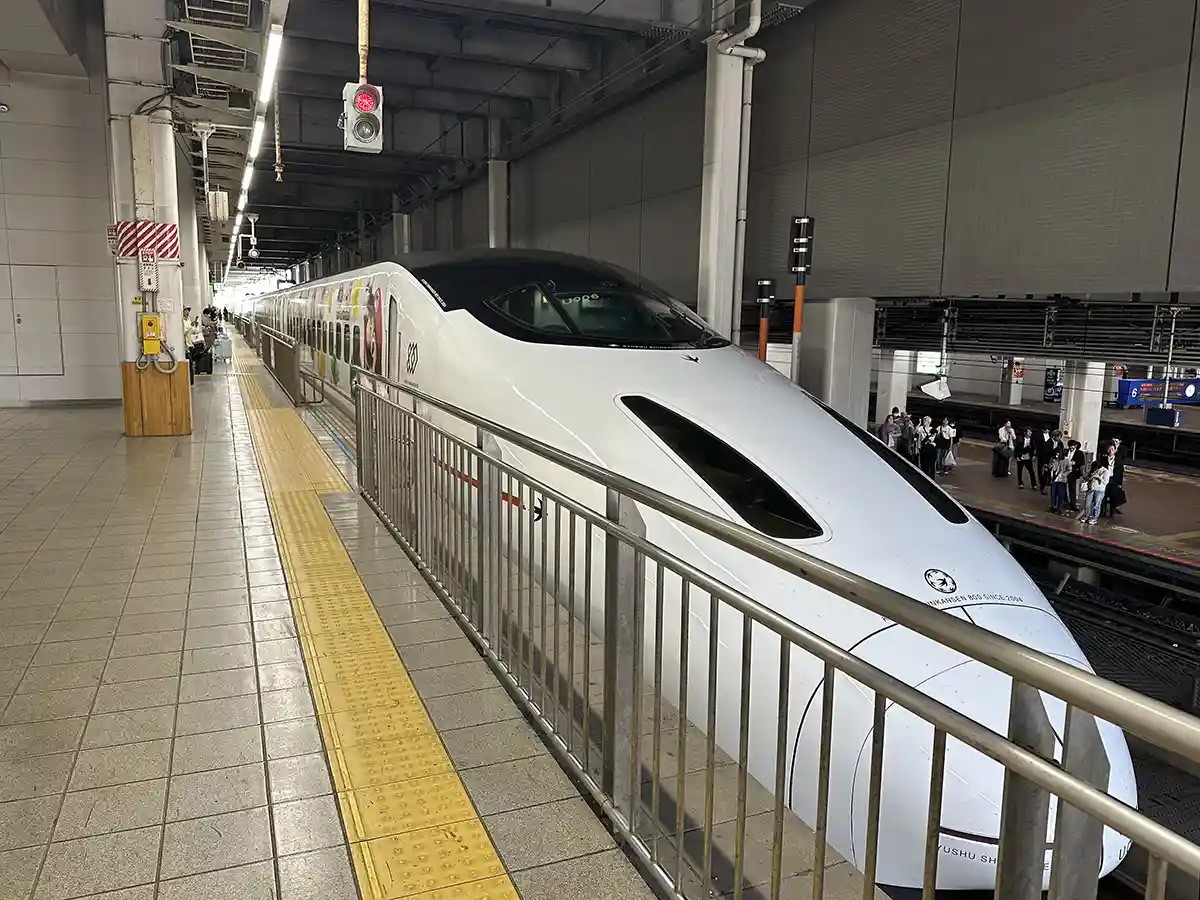
Hakata Station is the main terminal for the Sanyo (Osaka, Tokyo) and Kyushu (Kumamoto, Kagoshima) Shinkansen.
All trains use the same platform area, so just check your train and platform before boarding.
Shinkansen Lines
- Sanyo Shinkansen — Hakata to Shin-Osaka, with some trains continuing to Tokyo
- Kyushu Shinkansen — Hakata to Kagoshima-Chuo via Kumamoto
Shinkansen Train Types
Train | Typical Use | JR Pass |
Nozomi | Shin-Osaka / Kyoto / Tokyo | Not covered (extra ticket required)* |
Hikari | Shin-Osaka / Kyoto / Hiroshima | Covered |
Kodama | Sanyo Line local stops | Covered |
Mizuho | Kumamoto / Kagoshima-Chuo | Not covered (extra ticket required)* |
Sakura | Shin-Osaka or Kumamoto / Kagoshima-Chuo | Covered |
Tsubame | Kyushu Line local stops | Covered |
*JR Pass holders must purchase an [ONLY WITH JAPAN RAIL PASS] NOZOMI MIZUHO Ticket each time you use Nozomi or Mizuho trains.
Platform Numbers and Boarding
Shinkansen platforms are numbered 11 to 16 on the upper floors (3F). The departure board inside the gates shows platform, car positions, and departure time in four languages.
How to Reach the Shinkansen Gates
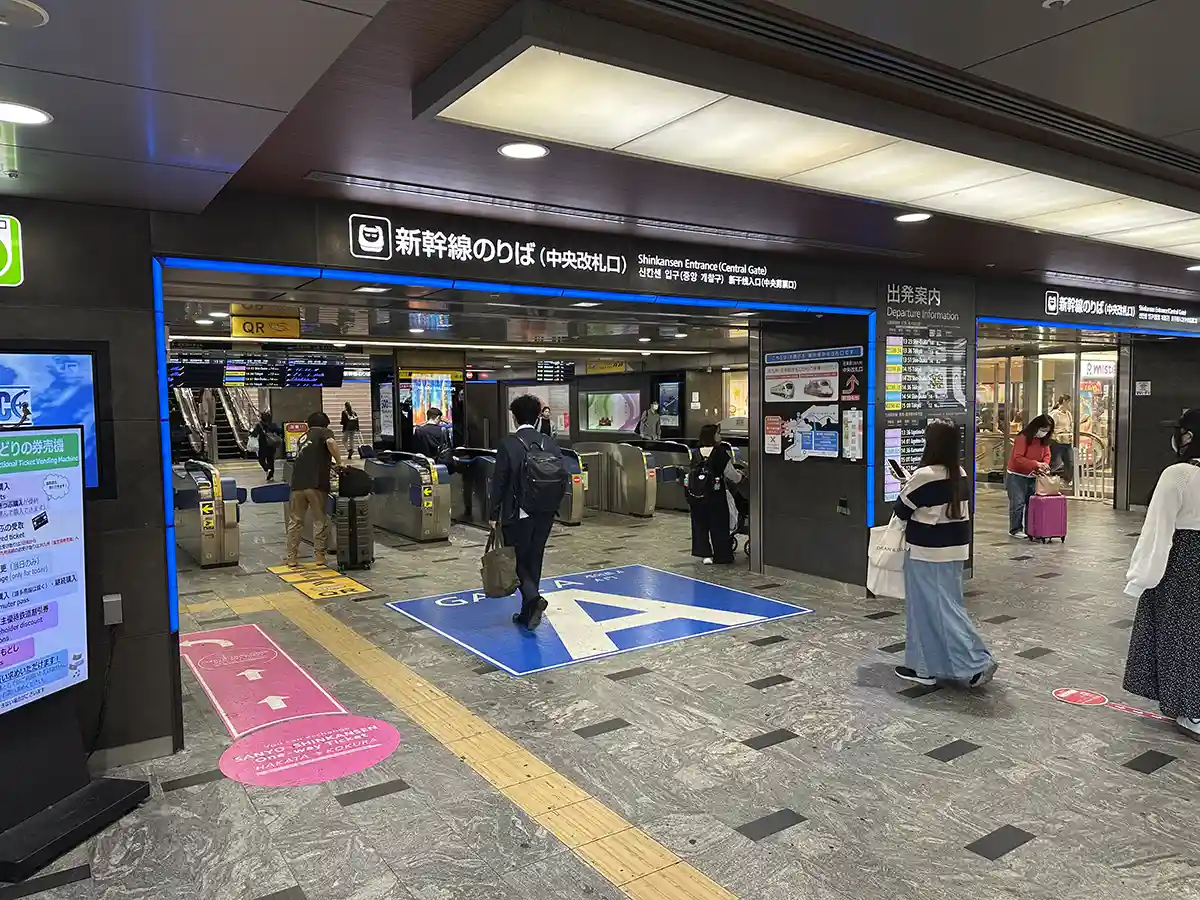
The key is simple. From outside or the subway, head toward the Chikushi Exit, find the Shinkansen Central Gate, and check the departure board for your platform.
From JR local trains, use the transfer gates inside the JR concourse.
For step-by-step directions, see our step-by-step guide.
Shinkansen Routes and Travel Times
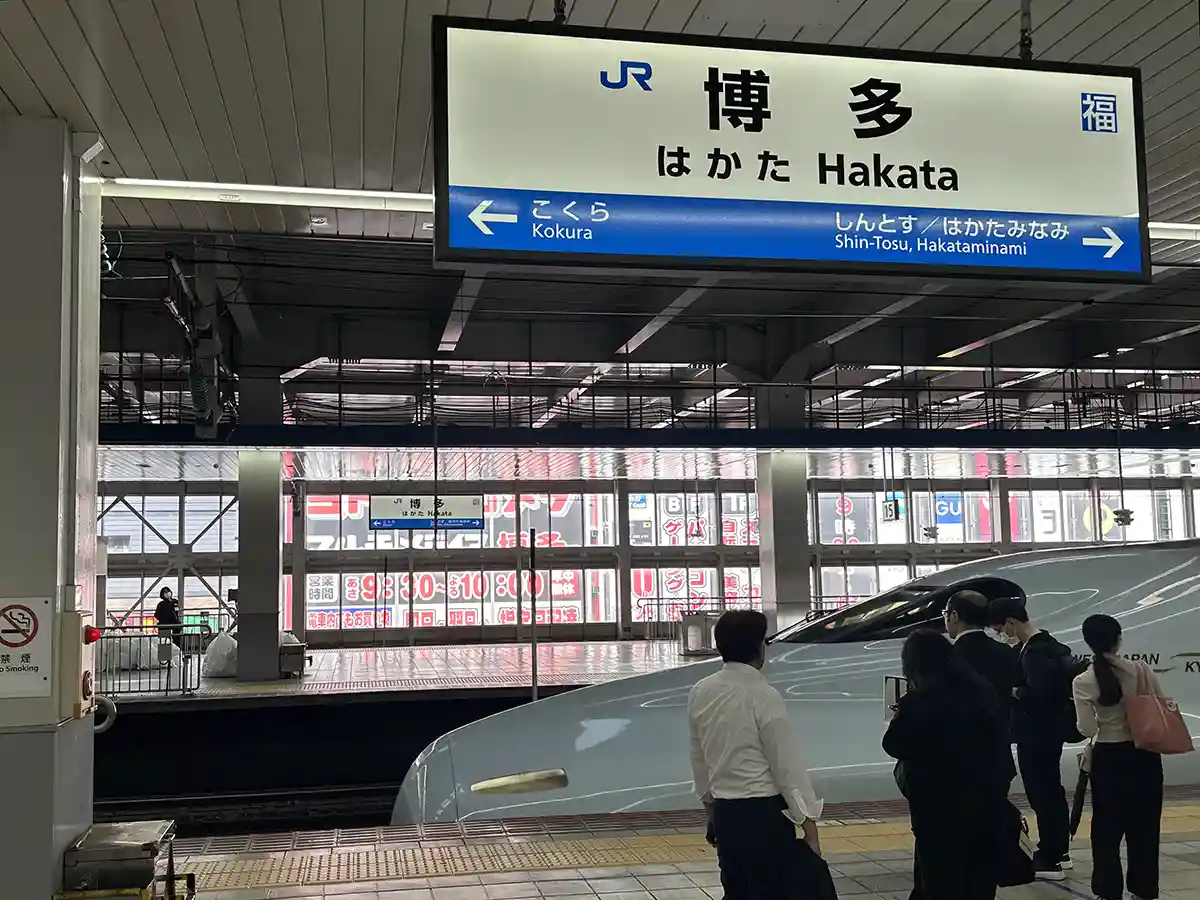
From Hakata Station, you can travel across Japan by Shinkansen, from nearby cities in Kyushu to major destinations like Osaka, Kyoto, and Tokyo. Travel times vary depending on the train type.
Destination | Best Train (Direct) | Travel Time |
Hiroshima | Nozomi / Mizuho / Sakura | About 1 hr 5 min |
Shin-Osaka | Nozomi / Mizuho / Sakura | About 2 hr 20–30 min |
Kyoto | Nozomi / Hikari | About 2 hr 30–45 min |
Tokyo | Nozomi | About 5 hr |
Kumamoto | Mizuho / Sakura | About 35 min |
Kagoshima-Chuo | Mizuho / Sakura | About 1 hr 20 min |
Important Notes for JR Pass Holders:
- To Kyoto: Sakura trains end at Shin-Osaka. You can transfer to a local train or a Hikari Shinkansen to reach Kyoto (about 15 mins from Shin-Osaka).
- To Tokyo: Only Nozomi trains offer direct service from Hakata. If using a JR Pass without the Nozomi upgrade, you must transfer at Shin-Osaka to a Hikari train.
Fukuoka Airport Access
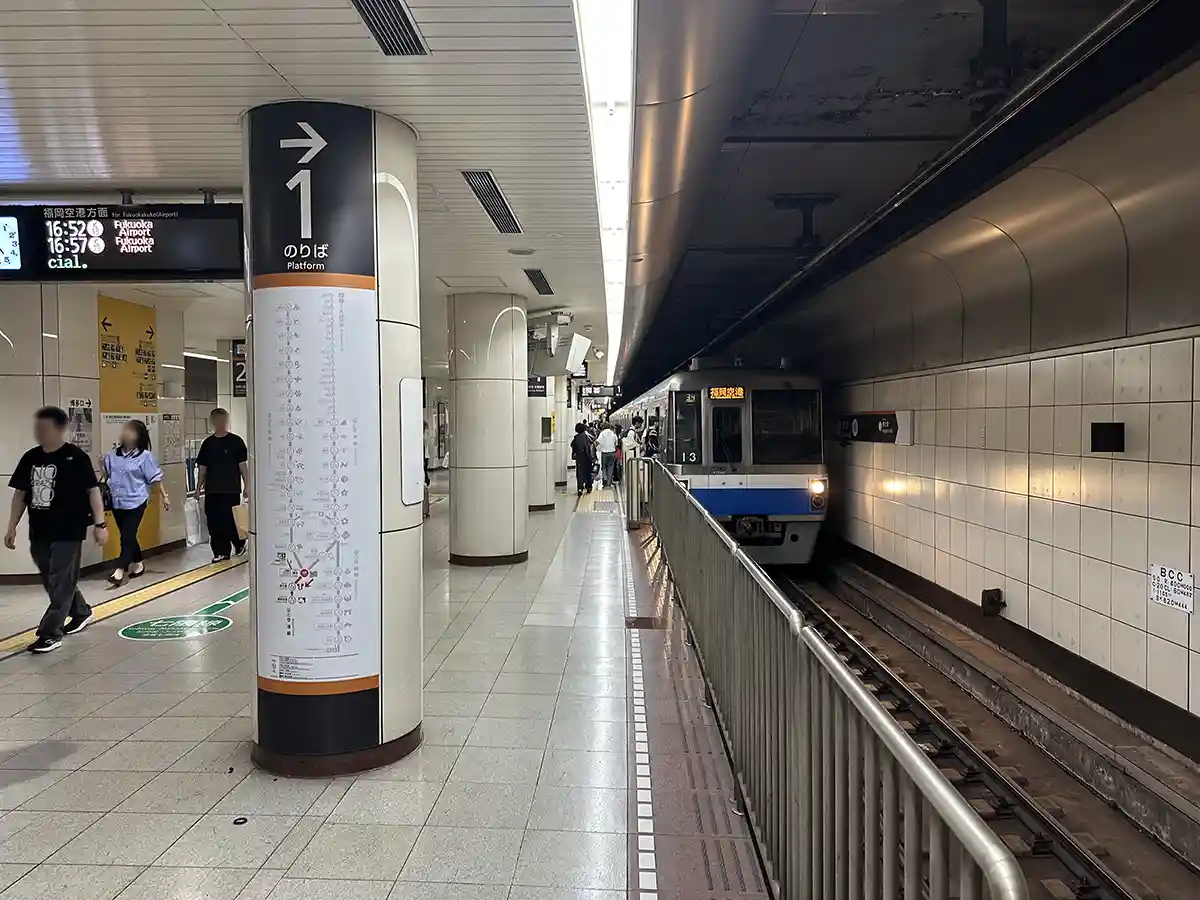
To reach Hakata Station, take the Fukuoka City Subway Kuko Line from the Domestic Terminal. The journey takes about 5 minutes.
The International Terminal has no subway station. Take the free shuttle bus to the Domestic Terminal, then transfer to the subway.

Station Facilities
Ticket Offices and Machines
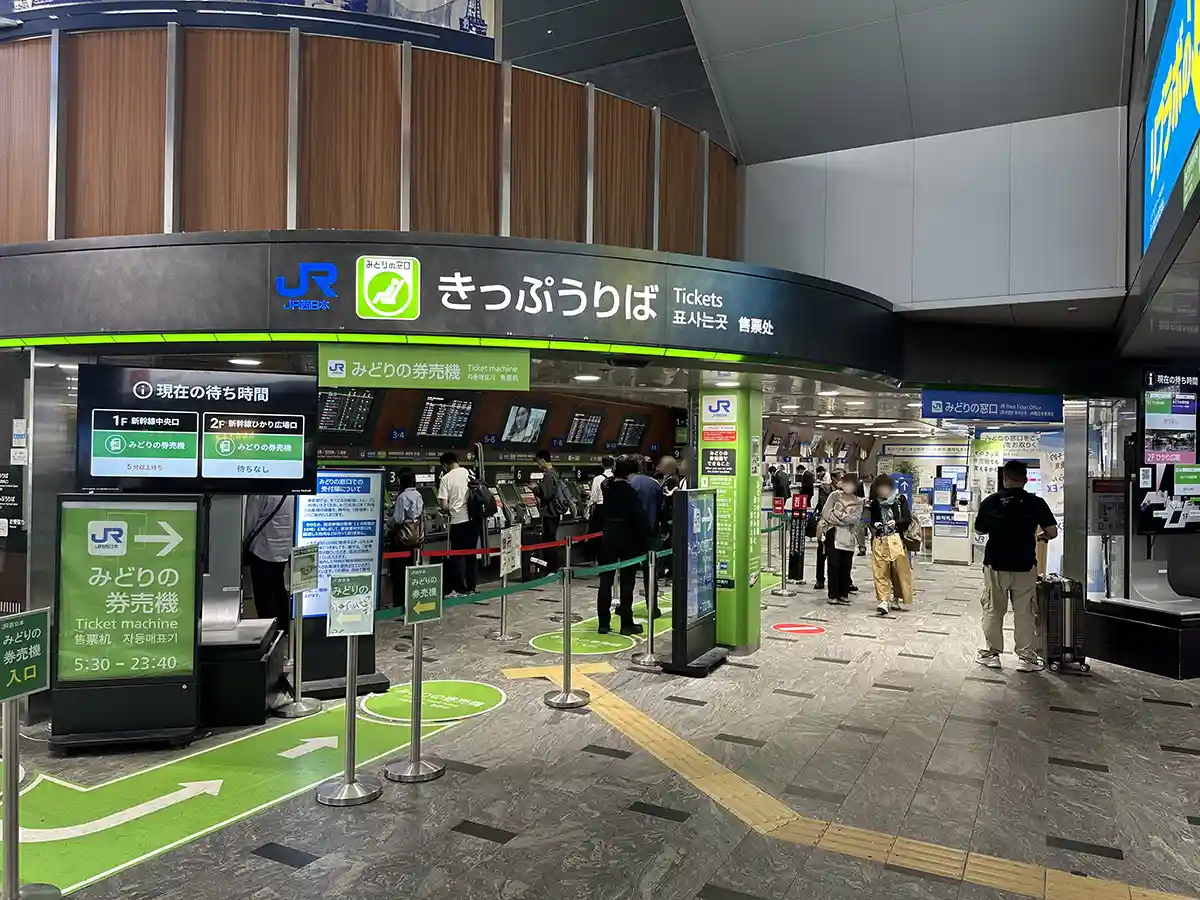
JR Ticket Offices are located in multiple areas of the station, including near the Shinkansen gates and main concourses.
Ticket machines are also available near the Shinkansen gates and other ticket gates throughout the station.
Coin Lockers and Baggage Storage
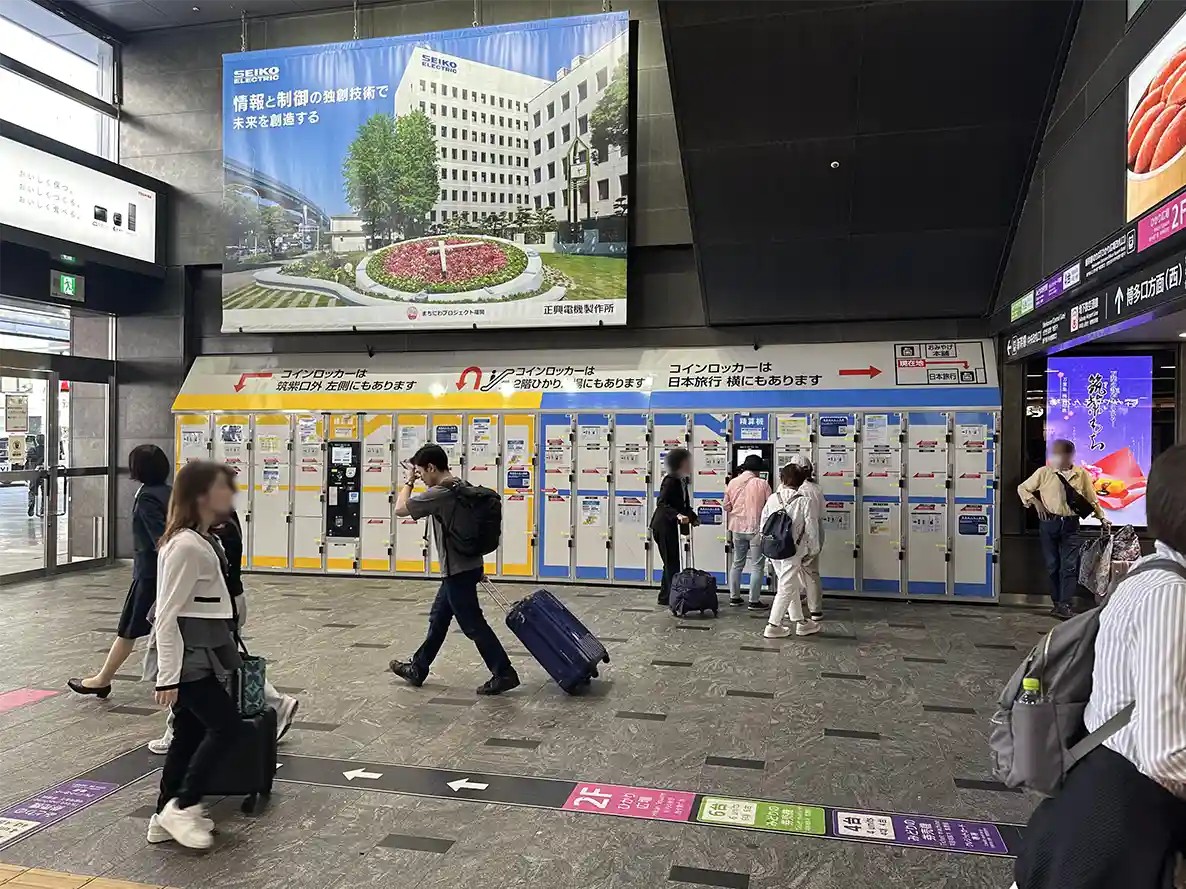
Most coin lockers at Hakata Station are located on the Chikushi Exit side, especially near the Shinkansen area.
- B1: Near the subway entrance
- 1F: Near Hakata Deitos
- 1F: Beside TiS Hakata
- 2F: Hikari Square
There is also a baggage storage counter in Hikari Square (2F), which is useful for larger luggage.
Tourist Information
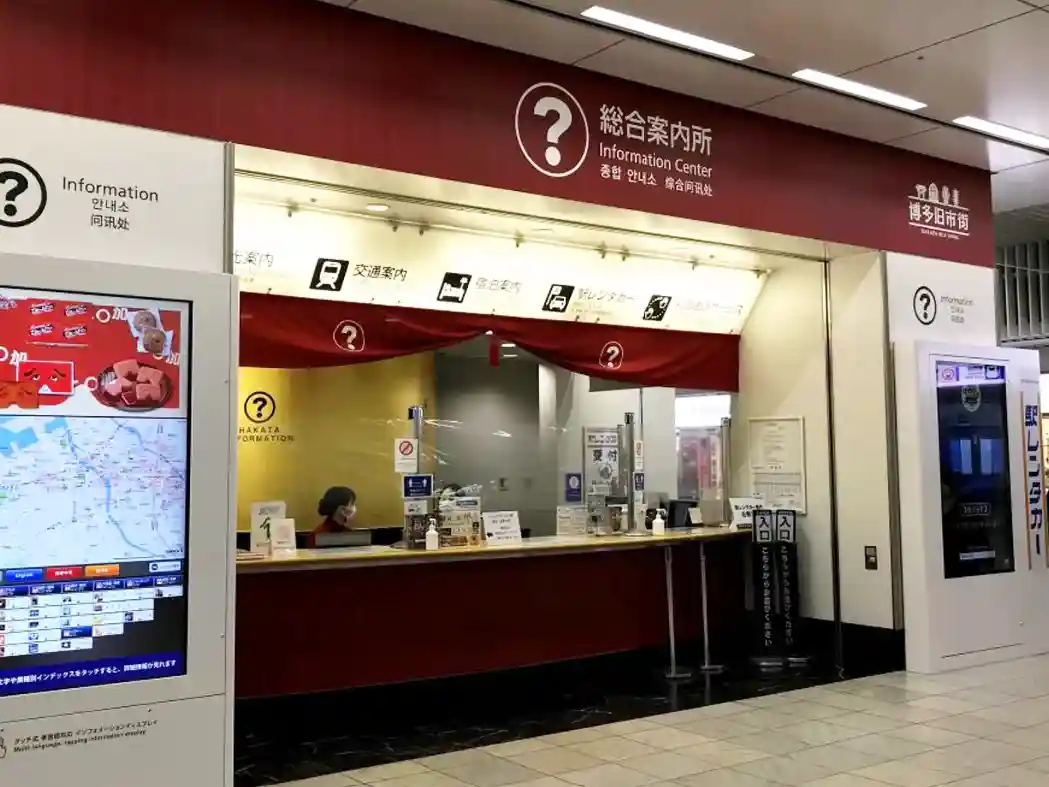
The information center is in the central concourse of JR Hakata Station.
You can get tourist information for Fukuoka and Kyushu, along with help on transportation, JR services, and accommodation. Brochures are available, and you can also use tablets to check the latest travel information.
Staff can assist in English and Korean.
Food and Shopping
Hakata Ramen
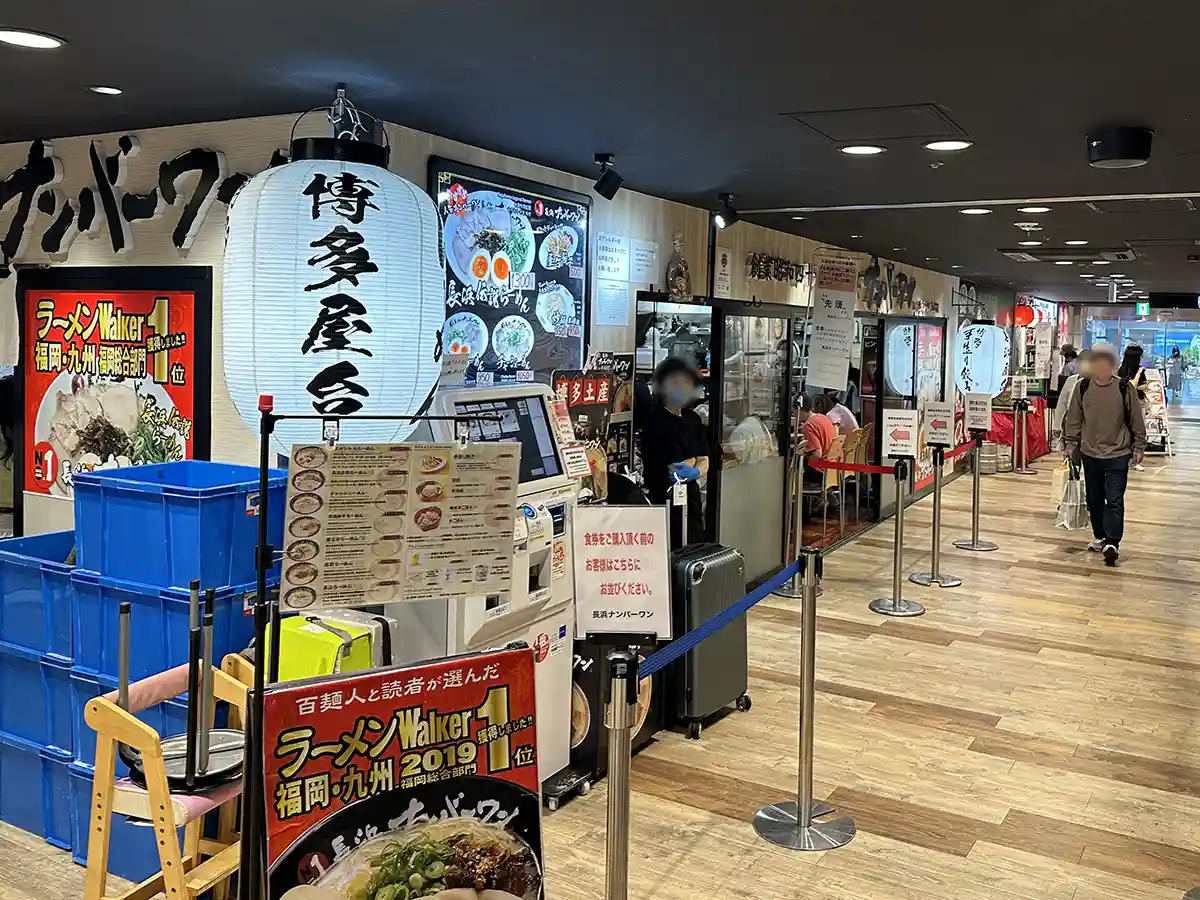
Hakata Men-Kaido in the Deitos Building (2F) has several well-known ramen restaurants.
Hakata ramen is known for its thin noodles and rich pork-bone broth. It is definitely worth trying.
JR Hakata City Amu Plaza
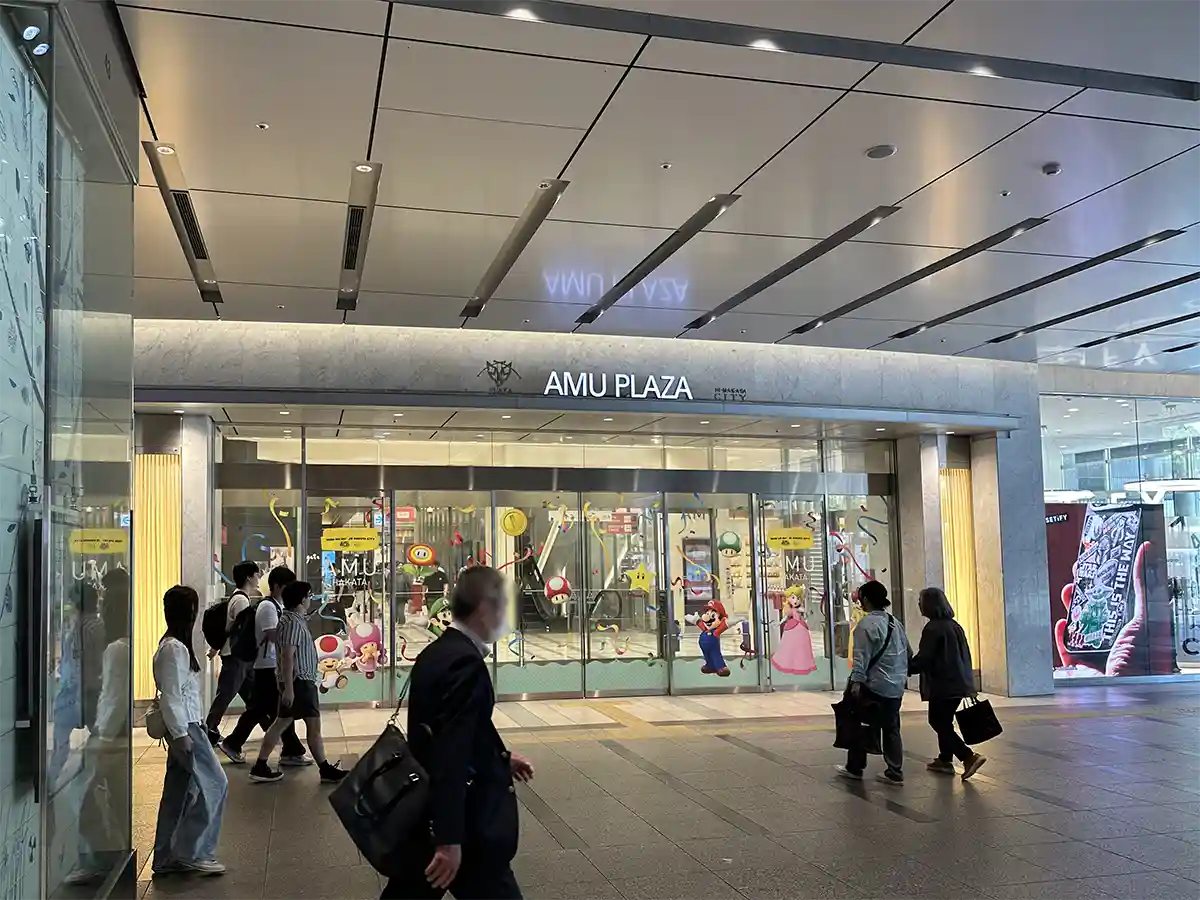
Amu Plaza Hakata has fashion, electronics, a cinema, and everyday shops. City Dining Kuuten (9F–10F) offers restaurants with city views.
Ming and Deitos for Souvenirs
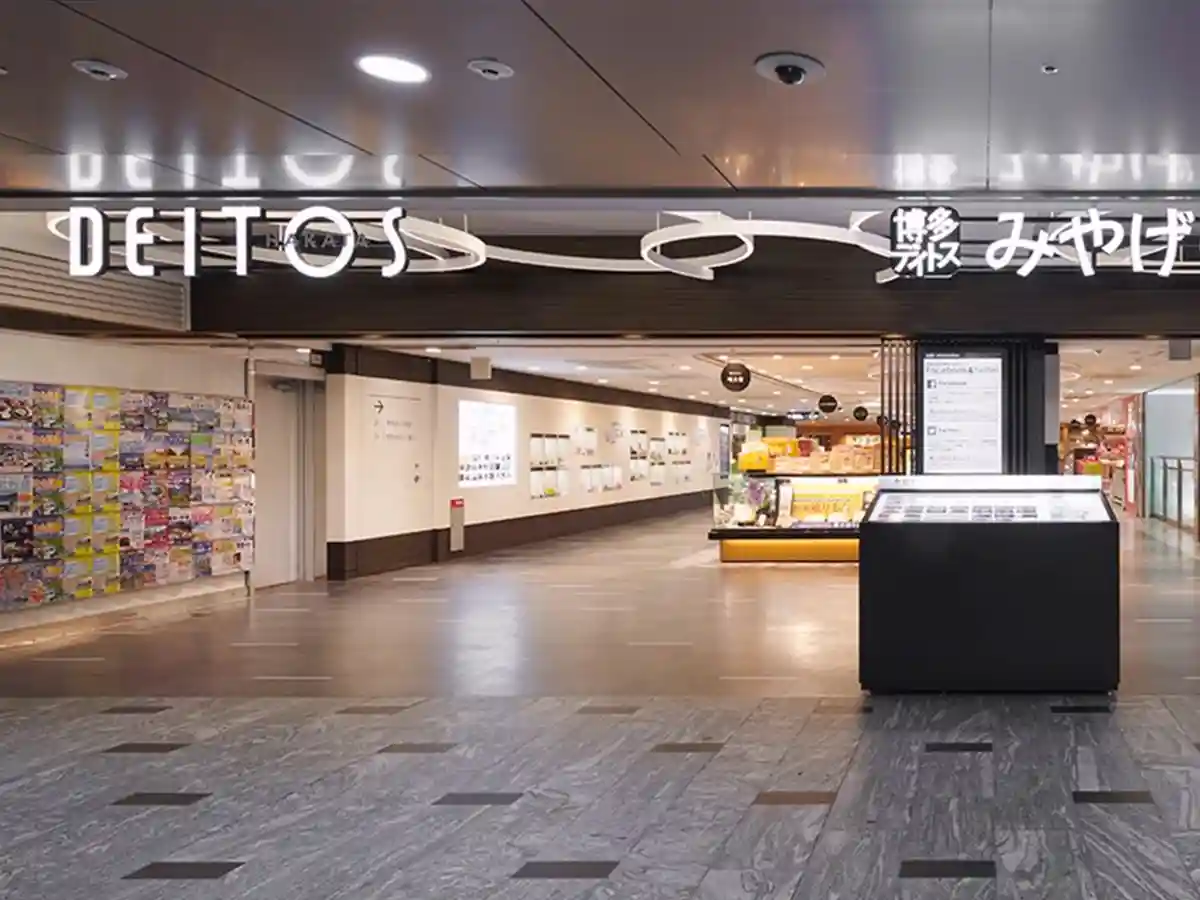
Located inside the station, Ming and Deitos are great for last-minute shopping.
Ming is one of the largest souvenir areas, with a wide range of local products. Deitos is located closest to the Shinkansen gates. It is convenient before boarding.
Ekiben Shops Inside the Gates
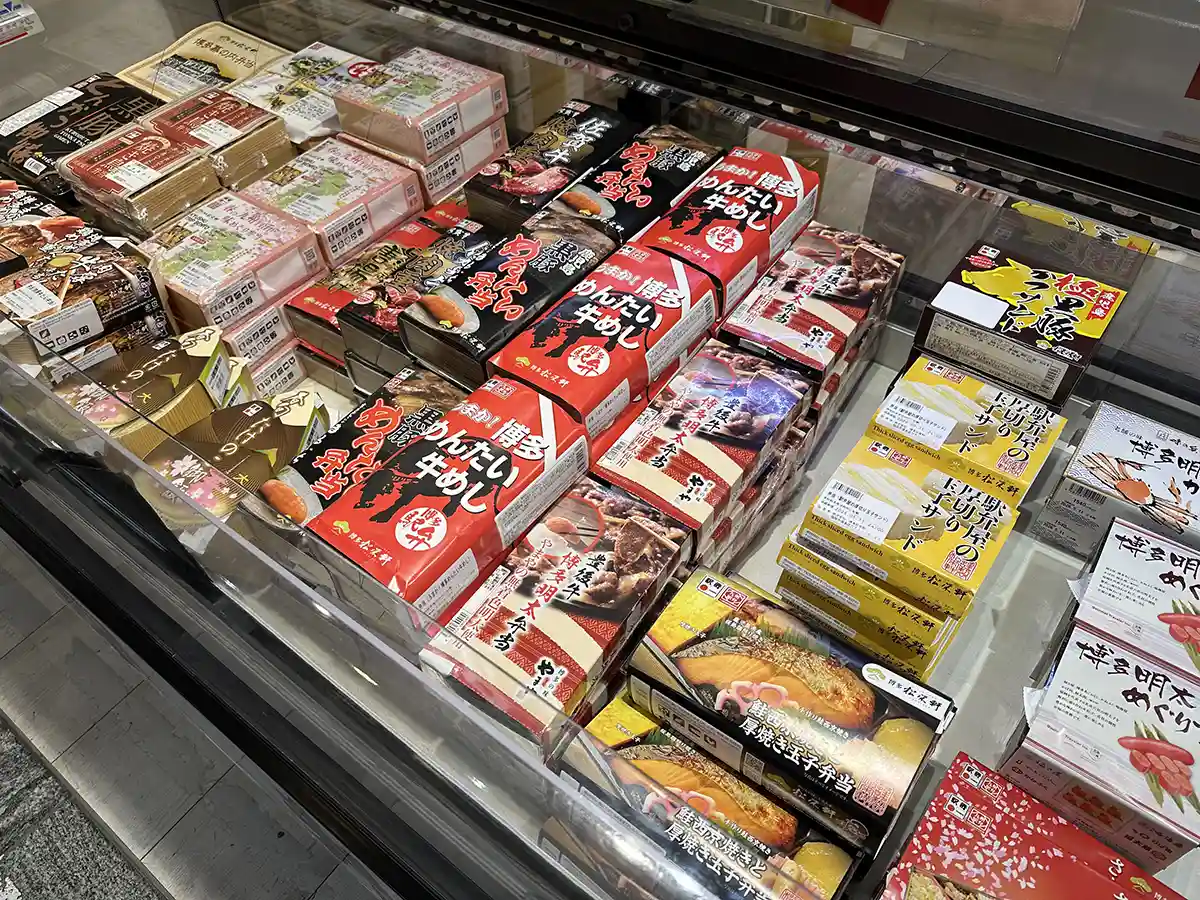
You can find small shops inside the Shinkansen gates selling ekiben — Japanese train station lunchboxes. It’s a good idea to buy one before boarding.
In Hakata, popular choices often feature local specialties such as karashi mentaiko (spicy cod roe) and takana (pickled mustard greens), as well as ekiben made with Kyushu brand beef.
Tsubame no Mori Hiroba Rooftop Garden
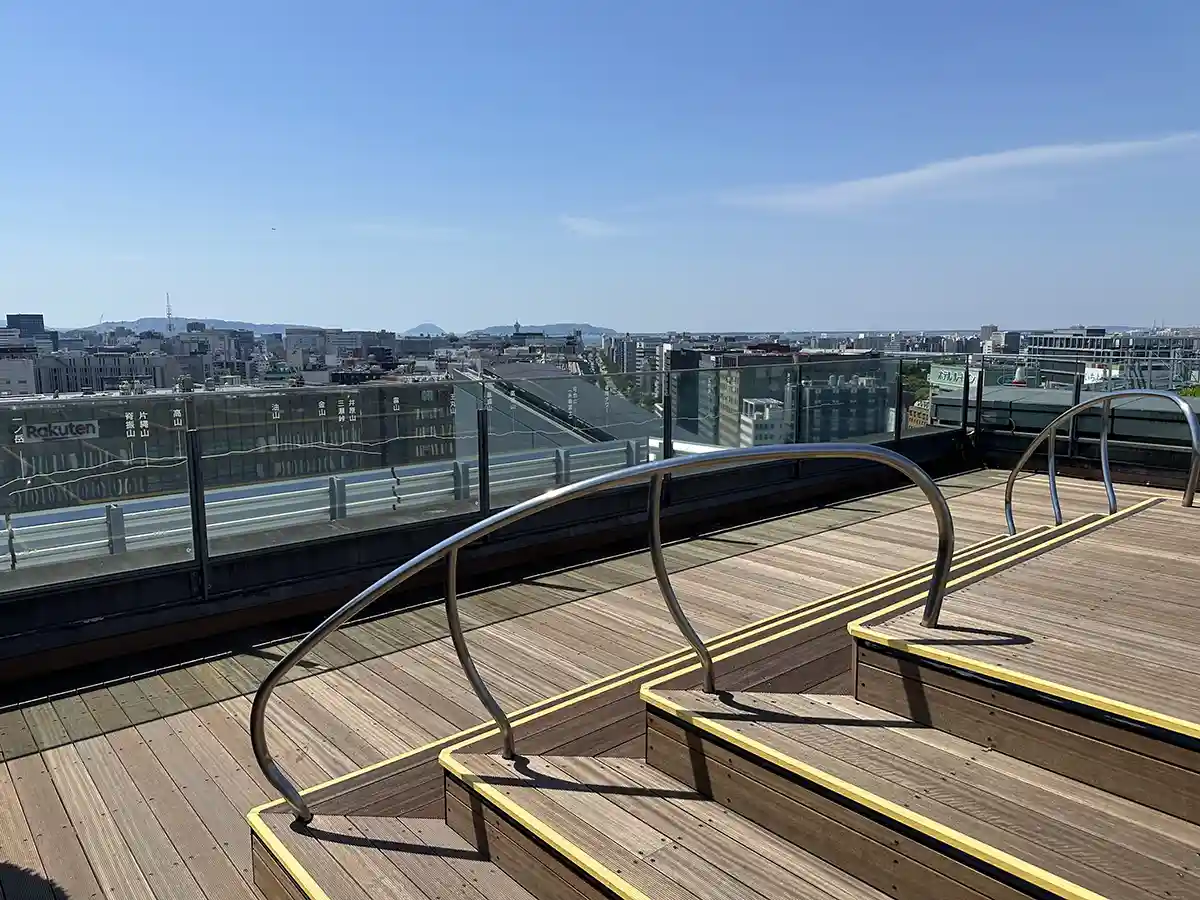
The rooftop of JR Hakata City has a free garden with a railway shrine and views of the city and incoming trains. It's a great place to escape the crowds of the station for a bit.
FAQ
Why is Fukuoka station called Hakata?
In 1889, the former cities of Hakata and Fukuoka were merged to form Fukuoka City. The station kept the name “Hakata.”
Can I use my JR Pass on Nozomi?
JR Pass holders must purchase an [ONLY WITH JAPAN RAIL PASS] NOZOMI MIZUHO Ticket to use Nozomi trains.
Which exit is closest to Shinkansen gates?
Use the Chikushi Exit (east side).
How long does it take to get from Fukuoka Airport to Hakata Station?
About 5 minutes by subway from the Domestic Terminal.
What to do at Hakata Station?
You can shop at JR Hakata City, try Hakata ramen, relax at the rooftop garden, and buy Kyushu souvenirs or an ekiben before boarding the Shinkansen.
Where to exchange Japan Bullet Train QR code?
Use the ticket machines near the Shinkansen Central Gate (1F, Chikushi side). Scan your QR code to collect your paper ticket.
Plan Your Visit
Hakata Station is more than a transit hub. It is the gateway to Kyushu, with fast Shinkansen connections, an airport just five minutes away, and dining and shopping right inside the building.
Whether you are arriving from Tokyo, heading to Kagoshima, or exploring Fukuoka for a day, Hakata Station makes it easy to travel on your schedule.
Not sure where to start? Japan Bullet Train makes it simple. Book your seat online and receive a QR code by email. Just scan it at the ticket machine when you arrive, and collect your ticket in seconds.