


Customer Support
Arriving too late for a Shinkansen can mean a stressful rush through the station, but arriving far too early usually isn't necessary either. The right timing isn't the same for every traveler, so how early should you arrive for your Shinkansen?
This guide gives you a simple timing model and shows you how to adjust it for your own trip.
Plan to arrive at the station 20 to 30 minutes before your Shinkansen departs. Be at your boarding position at least 5 minutes before departure and wait there for your Shinkansen.
Checkpoint | Recommended Timing |
Arrive at the station | 20–30 minutes before departure |
Arrive on the platform | 10–15 minutes before departure |
Be at your car position | About 5 minutes before departure |
You also don't need to arrive hours early. Shinkansen travel doesn't involve an airport-style security line or check-in process. A large buffer usually isn't necessary.
Reaching the station only gets you to the first checkpoint. You still need to pass through the ticket gate and walk to the correct platform. Then find the boarding position for your reserved car, or the appropriate non-reserved car if your train offers non-reserved seating.

Use 20 to 30 minutes as your starting point. At larger stations such as Tokyo, Kyoto, and Shin-Osaka, aim to arrive about 30 minutes before departure. Even at more compact stations, arriving about 20 minutes early gives you some extra time in case you take a wrong turn or have trouble passing through the ticket gate.
Shinkansen trains usually depart on time, so it is better to have a small buffer than to arrive at the last minute.
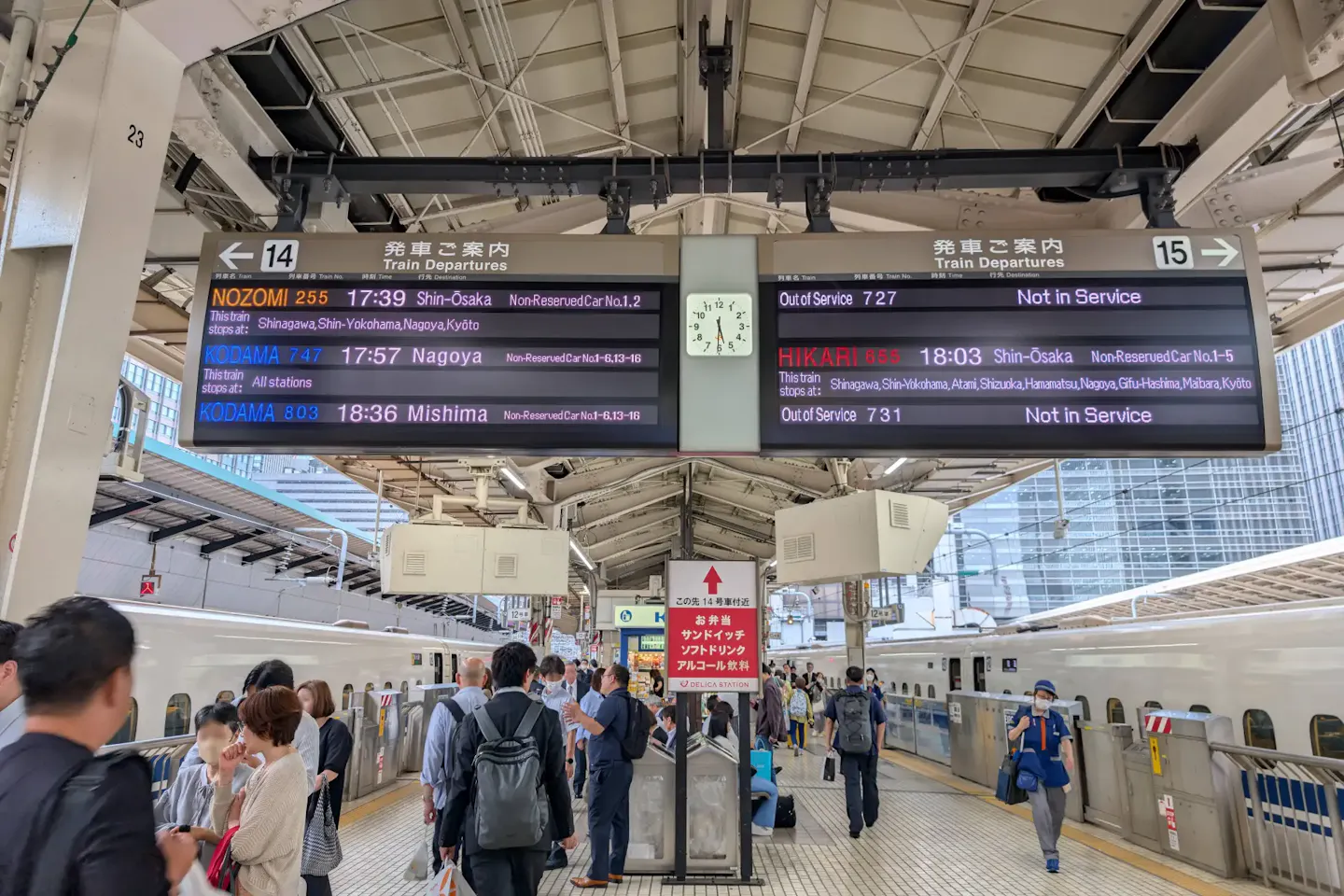
![Shinkansen platform at Tokyo Station showing directions to Nagoya and Shin-Osaka [img: 20250604]](https://images.microcms-assets.io/assets/2e55a1fd1f0d4f57adade83c1daaebd1/869e8b44822545e0acdce2291ca06920/tokyo-station-shinkansen-platform-14-15.webp)
Aim to reach the platform 10 to 15 minutes before your train departs. Shinkansen platforms are long, and depending on where you enter, it can take a few minutes to walk to your car's boarding position.
This is a comfortable margin, not a mandatory deadline.

At origin stations such as Tokyo and Shin-Osaka, the doors usually open about 5 to 10 minutes before departure after cleaning. Being ready about 5 minutes before gives you time to board, stow your luggage, and take your seat.
At intermediate stations such as Kyoto and Nagoya, trains may stop for only a few minutes. Be at your designated boarding position about 5 minutes before departure.
Allow more time at large or unfamiliar stations, and when your trip involves a transfer or large luggage.
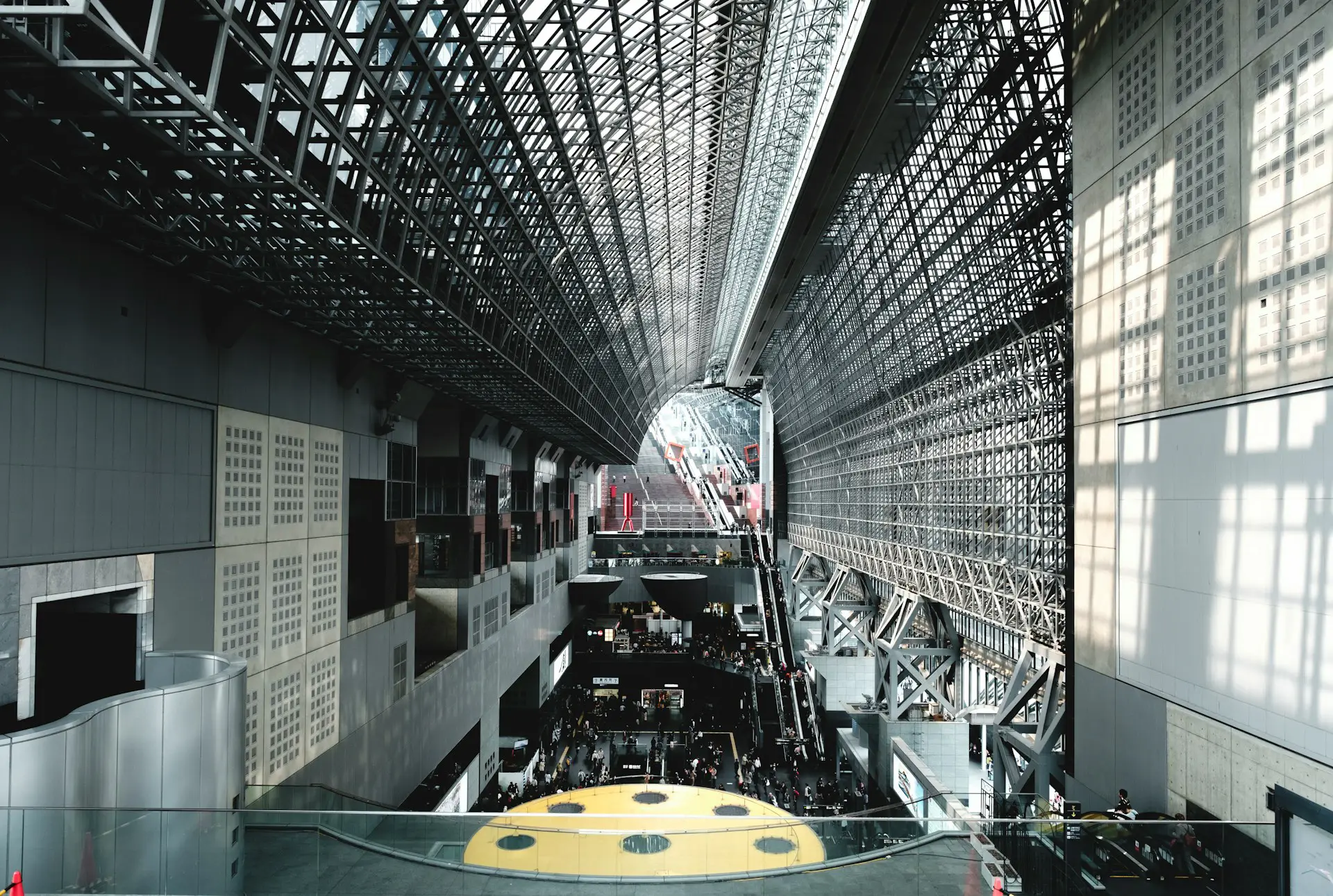
For large stations such as Tokyo, Kyoto, and Shin-Osaka, or any station you're unfamiliar with, aim to arrive about 30 minutes before departure. You may need to walk quite a distance from the station entrance to the Shinkansen platform, and complex station layouts can make it easy to take a wrong turn.
A station that looks simple on a map can still involve multiple staircases, escalators, or a change of concourse before you reach the right platform.
For more detailed guidance, see our Tokyo Station boarding guide, Kyoto Station boarding guide, and Shin-Osaka Station boarding guide.
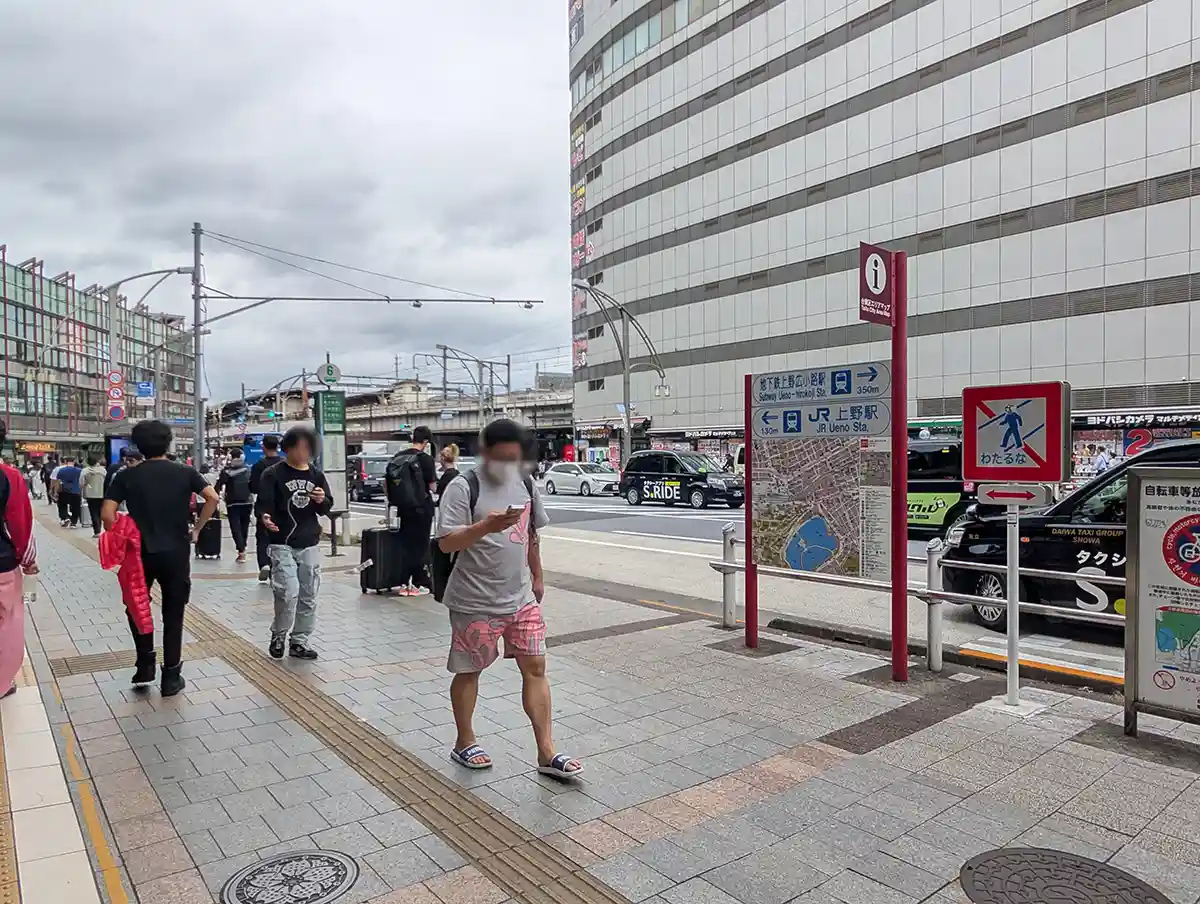
Take extra care when transferring from a non-JR line. At some stations, such as Ueno, stations with similar names may be in separate locations, so reaching the Shinkansen area can take longer than expected.
Transfer times vary by station. If your trip includes a transfer, check the route and walking time in advance.
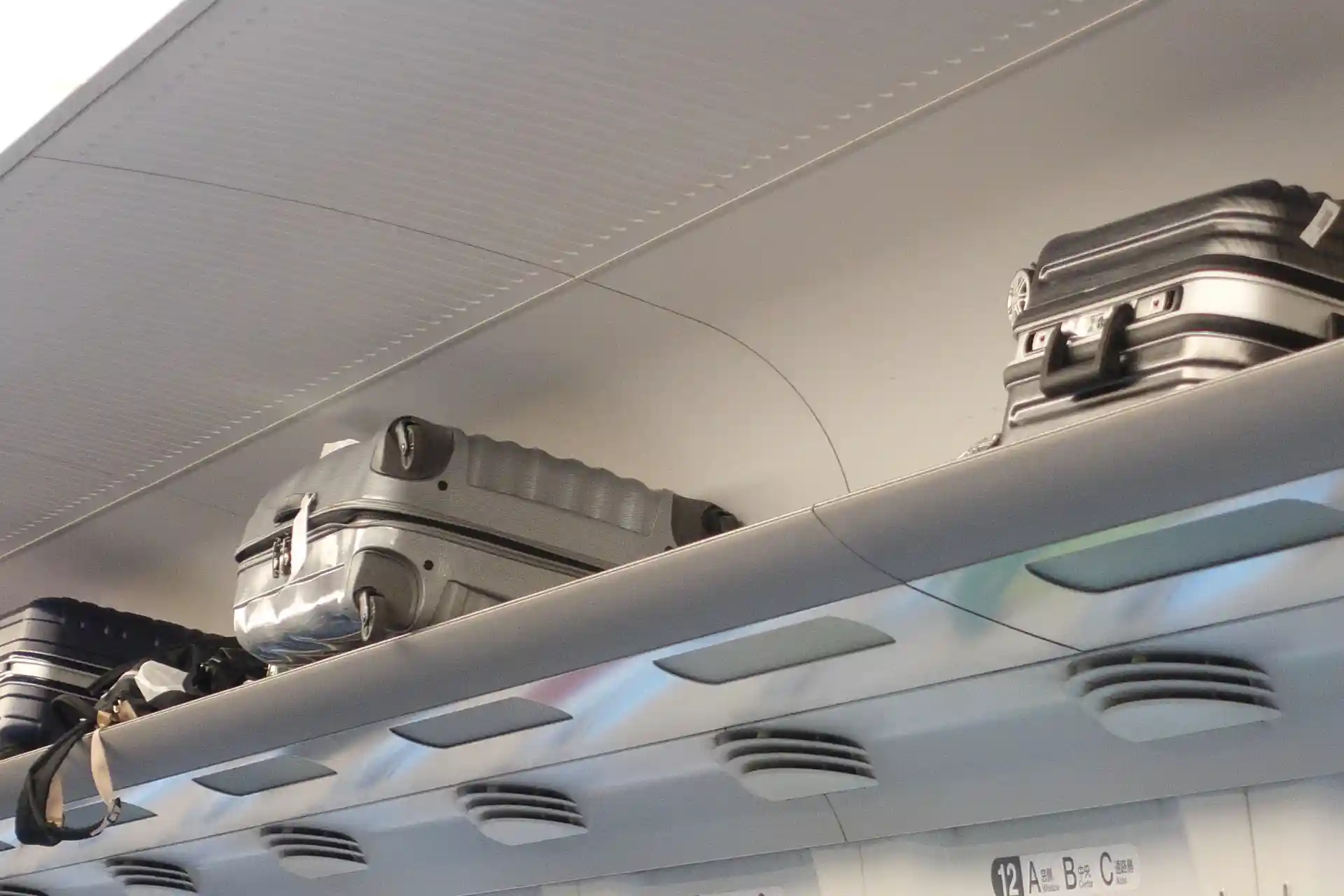
If you plan to use the overhead luggage rack, consider lining up at your boarding position a little earlier. On busy routes such as the Tokaido Shinkansen, overhead space can fill up quickly. If you board later, the rack above your seat may already be full, and you may need to find space farther away.
See our guides on where to put your luggage on the Shinkansen and Shinkansen luggage size rules for more details.
Give yourself extra time if you still need to pick up your ticket or plan to use a non-reserved seat. Remember to add extra time if you want to buy an ekiben or other food before boarding.
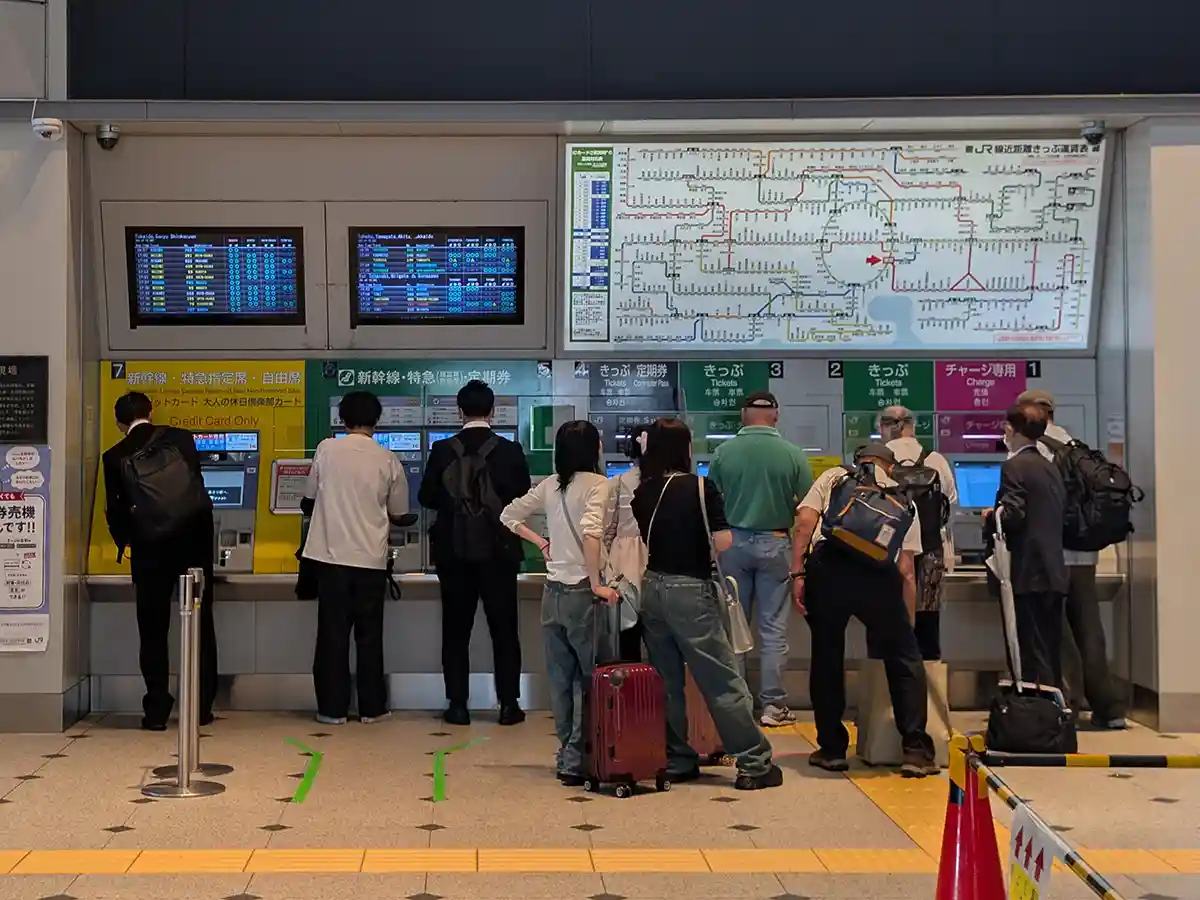
If you still need to collect your ticket, allow an extra 15 to 30 minutes. Aim to arrive about 45 to 60 minutes before departure.
Collect your ticket as early as possible rather than leaving it until the last few minutes.
If you booked through Japan Bullet Train, your booking confirmation includes a QR code, but the QR code is not a boarding ticket. You need to exchange it for a paper ticket at the station before boarding. This extra step takes time, especially if you have a tight connection.

If your train has non-reserved cars, aim to arrive at the station about 45 minutes before departure. This gives you about 15 minutes of additional queue time. During busy periods or at popular travel times, aim for about 50 to 60 minutes before departure.
Non-reserved tickets don't guarantee a seat. Arriving earlier improves your chances of finding one before the car fills up.
Some Shinkansen services, including a few of JR East's fastest trains, are reserved-only. Check your ticket type before planning extra queue time. Our Reserved vs. Non-Reserved Seats guide explains the difference in more detail.

If you want to buy food or browse shops before boarding, add that time separately. The 20–30 minute baseline covers getting to your platform and car position. It doesn't include extra time to shop.
If you're wondering whether to leave two or three hours early "just in case," you generally don't need to.
Unlike air travel, Shinkansen boarding does not involve routine baggage inspection or flight-style check-in. You also cannot usually board far in advance. At an origin station, boarding may begin about 5 to 10 minutes before departure, while at an intermediate station, you may only be able to board shortly before the train departs.
The 20–30 minute baseline, adjusted for your station and situation, is usually enough. If you arrive earlier than planned, you can wait in a waiting room or elsewhere in the station. Facilities vary by station, so the extra time is not wasted, but it is usually not necessary.
Use the timing above to build a plan for your trip.
This gives you a simple arrival plan based on your station and how you're traveling, rather than one fixed number for every trip.
Some details can change and should be confirmed close to your travel time:
You now have a simple way to time your arrival. Aim for 20–30 minutes at the station, 10–15 on the platform, and about 5 at your car position. Adjust these numbers for your station and for any extra tasks like ticket pickup. That gives you a practical planning buffer without automatically adding hours of extra waiting.
Once you're ready to head to the station, enjoy your journey and the experience of traveling by Shinkansen in Japan.
If you need any help, feel free to contact Japan Bullet Train. We are a Japan-based Shinkansen booking service with extensive knowledge of Shinkansen travel. Our website is available in multiple languages, and our customer support team can assist travelers in languages including English, Chinese, and Korean.