

Customer Support
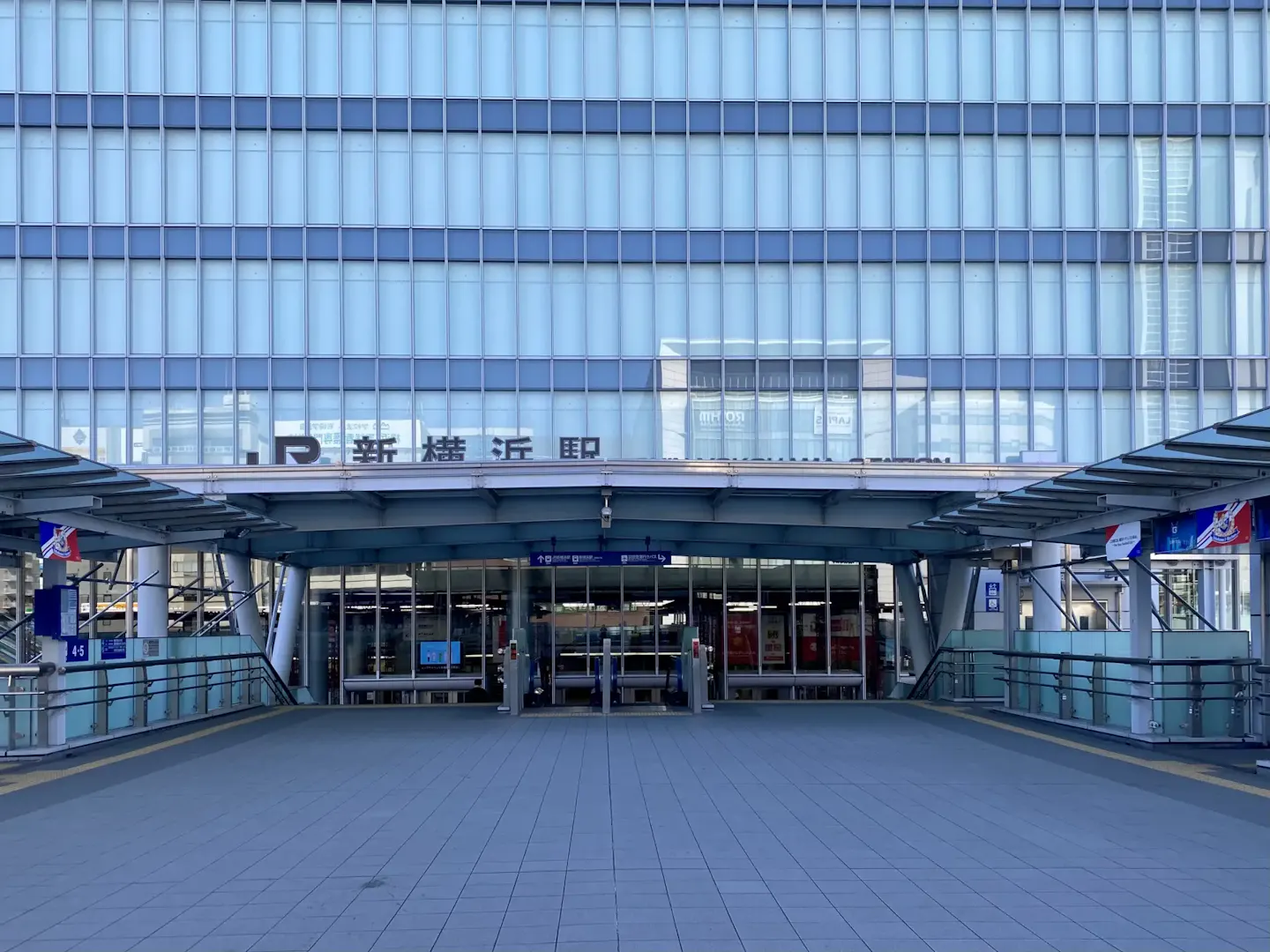
Not sure what to expect at Shin-Yokohama Station? Knowing how it differs from Yokohama Station, along with the station layout and main train lines, will make your trip much easier.
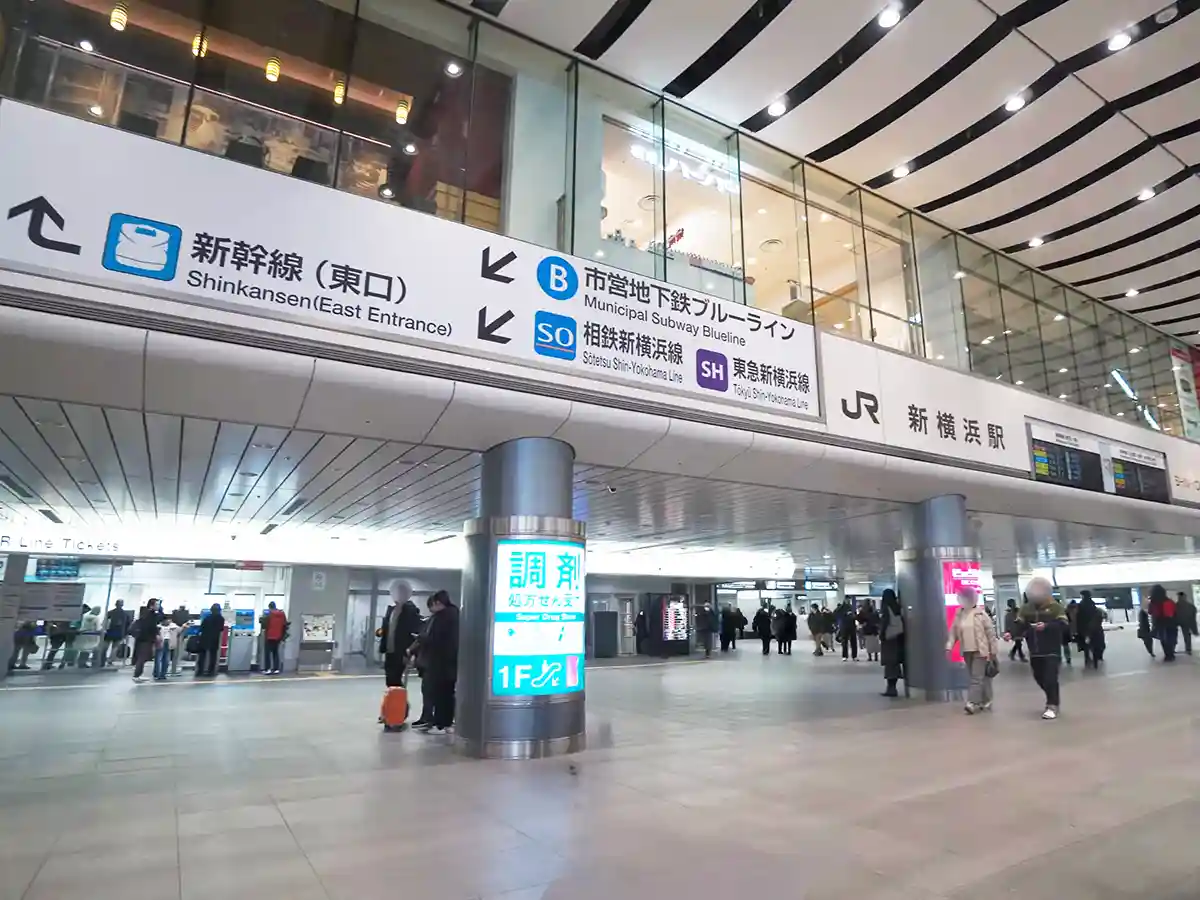
Shin-Yokohama Station is the Tokaido Shinkansen station for Yokohama, with connections to the JR Yokohama Line, Blue Line, and Tokyu/Sotetsu lines.
It is easy to confuse the two, but Shin-Yokohama and Yokohama are separate stations, about 10 minutes apart by the Blue Line.
If you are taking the Shinkansen, make sure your route shows Shin-Yokohama as your origin or destination. If you arrive at Yokohama Station by mistake, take the Yokohama Municipal Subway Blue Line to Shin-Yokohama. The ride takes about 10 minutes.
The station has several levels, with the Shinkansen at the top.
Think of 2F as the station's main hub. From 2F, head up to 3F for the Shinkansen or down to 1F for the JR Yokohama Line. The Blue Line and Tokyu/Sotetsu lines are underground. Elevators and escalators are available between the main levels, so getting around with large luggage is easier.
Shin-Yokohama connects to central Yokohama, Tokyo, and cities along the Tokaido Shinkansen.
Line | Covers | Popular Destinations / Use For |
Tokaido Shinkansen (JR) | Long-distance | Tokyo, Nagoya, Kyoto, Shin-Osaka |
Subway Blue Line | Central Yokohama | Yokohama Station, Sakuragicho for Minato Mirai, and Kannai for Chinatown |
Tokyu/Sotetsu Lines | Tokyo & Kanagawa | Direct trains toward Shibuya, Meguro, and other parts of Tokyo |
JR Yokohama Line (JR) | Local / Suburban | Machida, Hachioji, and Higashi-Kanagawa |
JR lines, the city subway, and Tokyu/Sotetsu are operated separately and use different ticket gates. The Japan Rail Pass is not valid on the Blue Line or Tokyu/Sotetsu lines.
Shin-Yokohama is on the Tokaido Shinkansen. Tokyo and Shinagawa are to the east, while Nagoya, Kyoto, and Shin-Osaka are to the west.

All three Tokaido Shinkansen services — Nozomi, Hikari, and Kodama — stop at Shin-Yokohama. This makes the station a convenient starting point for trips toward both Tokyo and western Japan.
Typical travel times on the fastest services are:
For travel between Shin-Yokohama and Tokyo or Shinagawa, conventional JR trains are also an option instead of the Shinkansen. They take longer and require a transfer, but can be useful if you do not need the fastest route.
Travel times vary by service and timetable. For the differences between Nozomi, Hikari, and Kodama, see our guide to Nozomi, Hikari, and Kodama for a full comparison.
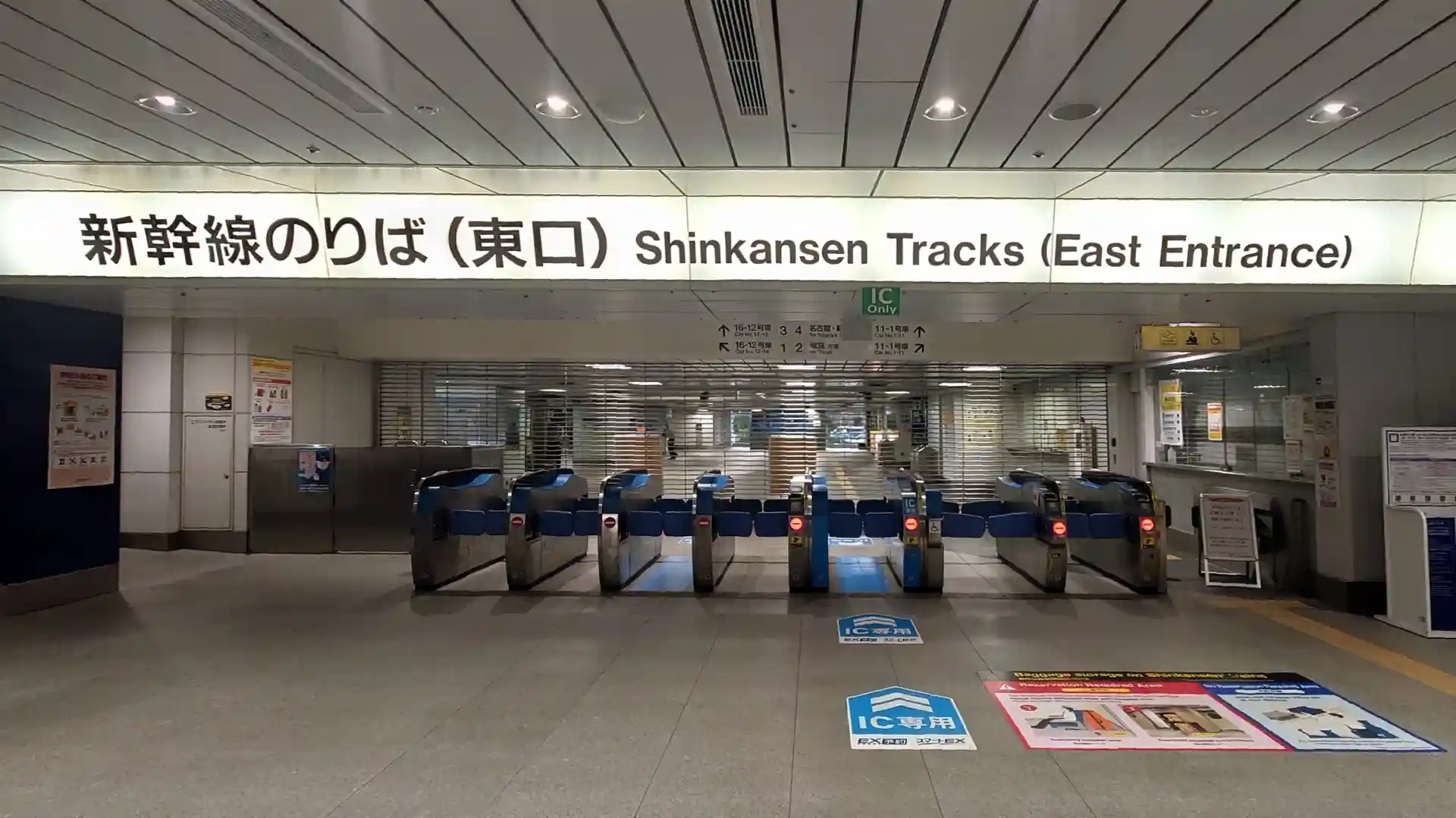
All Shinkansen ticket gates are on 2F.
If you are arriving on the Blue Line or Tokyu/Sotetsu lines, exit their ticket gates first, then go up to 2F and enter through a Shinkansen gate.
JR East lists the following standard transfer times to the Shinkansen:
Allow extra time if you have large luggage or the station is crowded. For oversized luggage rules, see our oversized luggage guide.
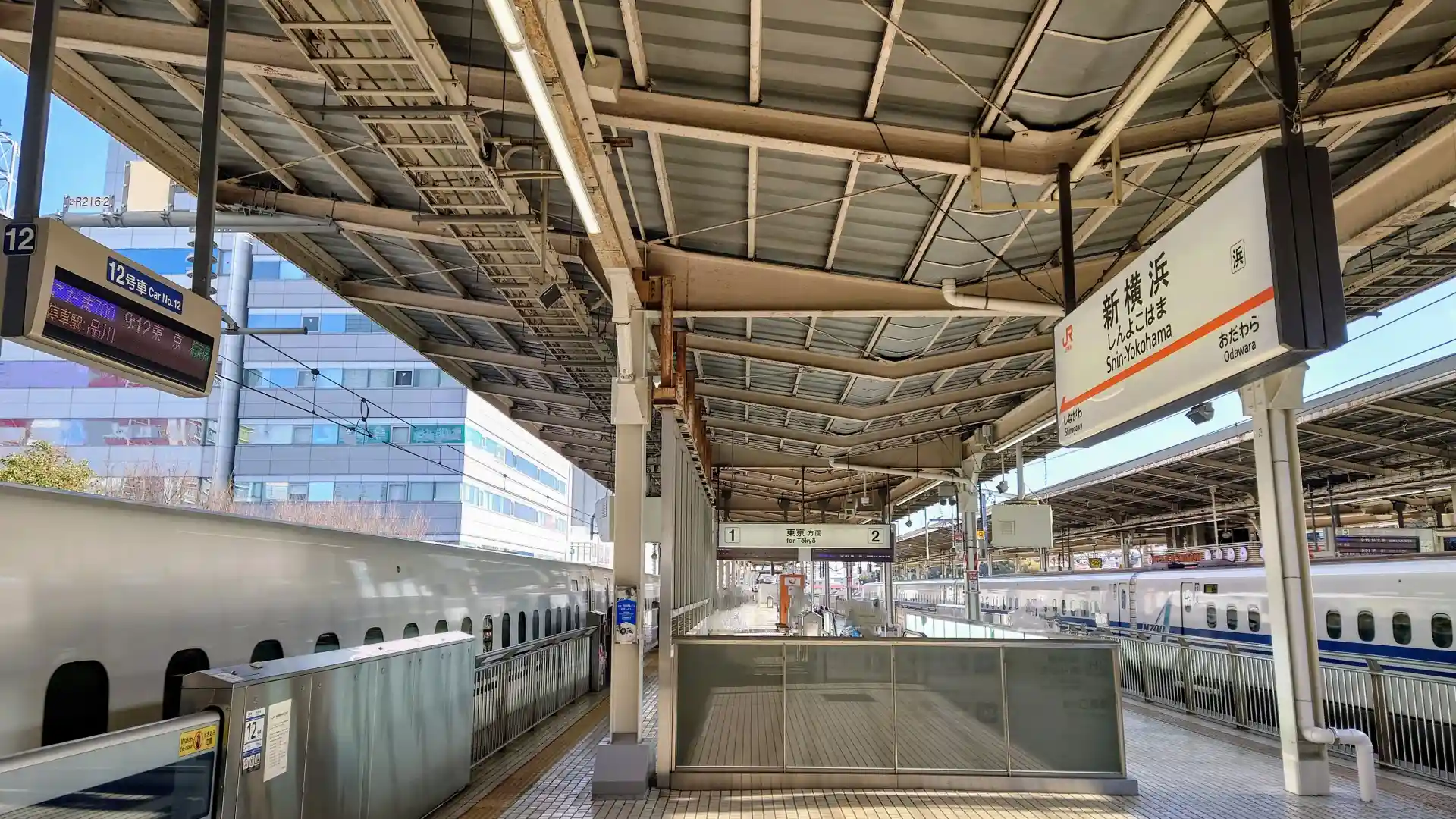
Shin-Yokohama has four Shinkansen platforms:
Some westbound trains may also use platforms 1–2, so always confirm the platform shown for your train on the departure display.
For general boarding steps, see our Shinkansen boarding guide. To plan your arrival time, see how early to arrive for the Shinkansen.
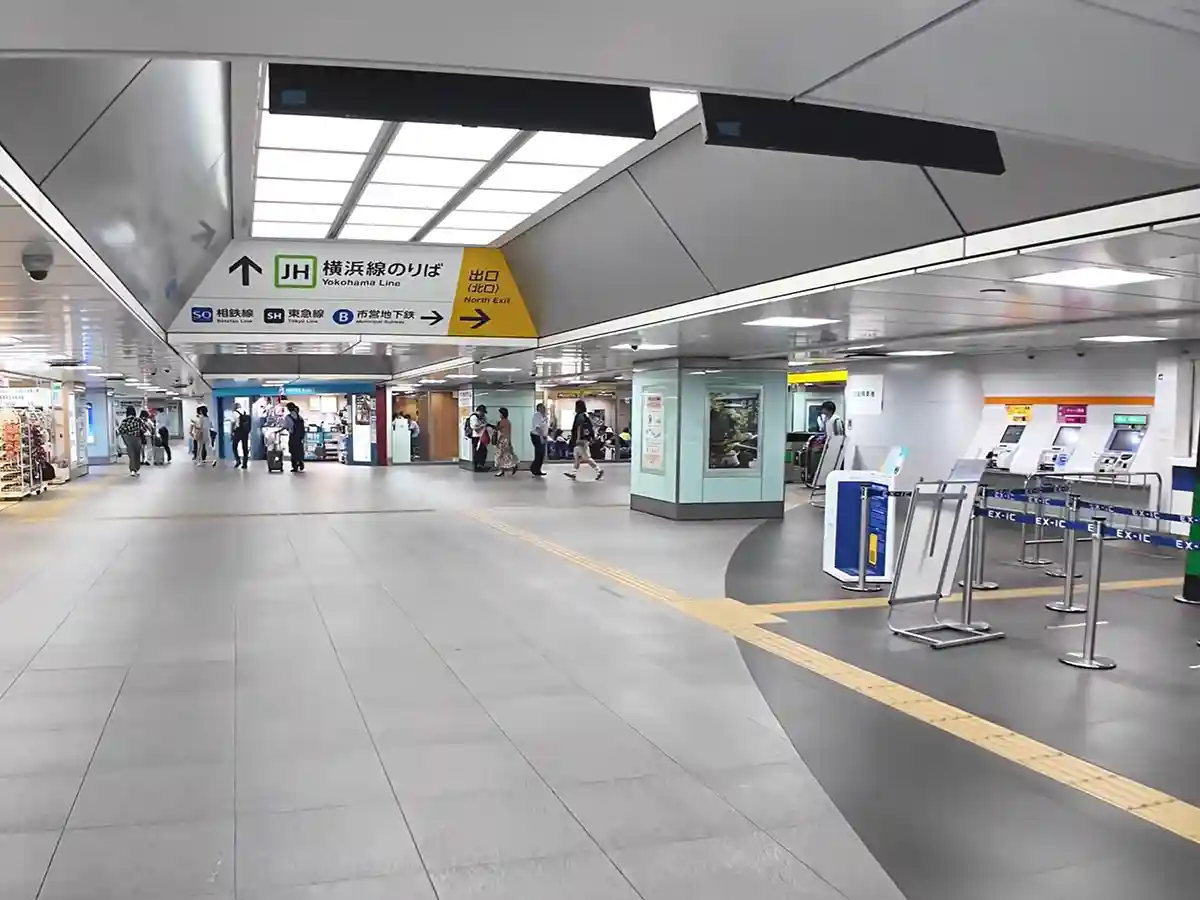
Shin-Yokohama is well connected to central Yokohama, Tokyo, the airports, and other popular destinations.
Many useful facilities are concentrated around the 2F concourse and the directly connected Cubic Plaza. This makes it easy to store luggage, eat, and take care of other essentials in one area.
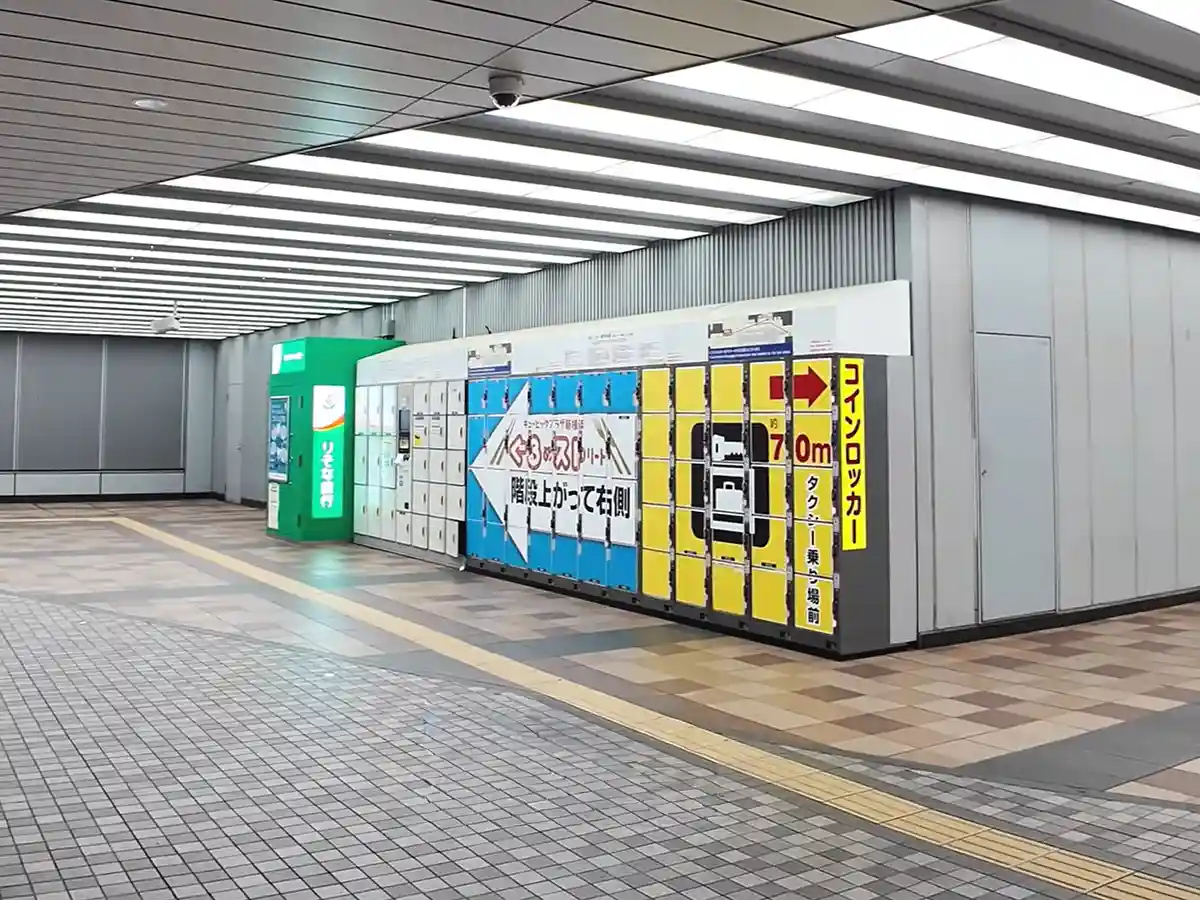
Coin lockers are located throughout Shin-Yokohama Station.
Many of the main coin lockers inside Shin-Yokohama Station and Cubic Plaza are keyless and accept IC cards such as Suica and PASMO. Most machines also accept 100-yen coins.
Shin-Yokohama has plenty of food options, whether you want an ekiben for the train, a sit-down meal, or something unique to the area.
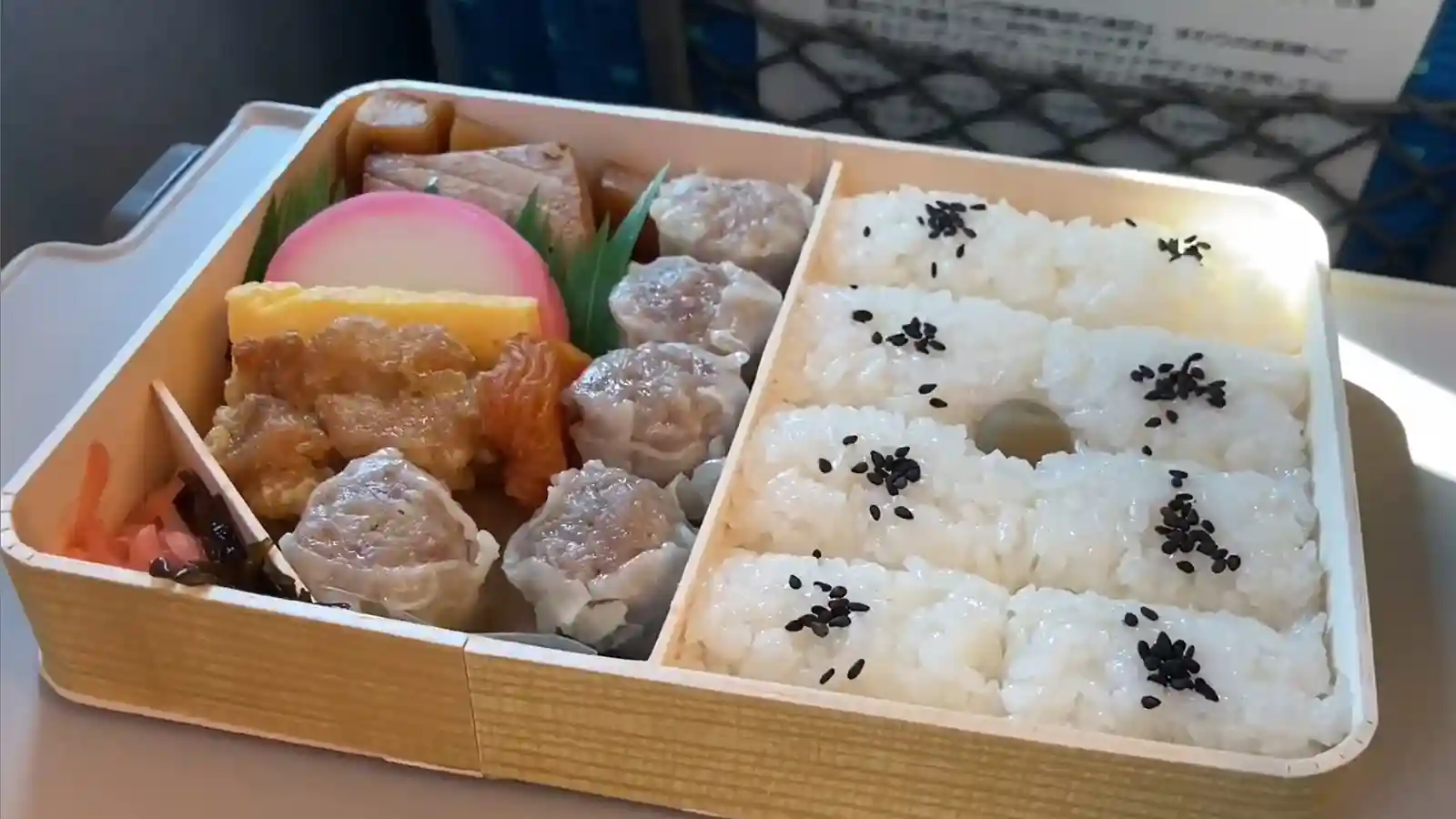
If you want to eat on the Shinkansen, pick up an ekiben before boarding.
Kiyoken's Shiumai Bento is a well-known Yokohama specialty and a popular choice for train journeys. Kiyoken products are available around the station, including Cubic Plaza and shops near or inside the Shinkansen gates.

Cubic Plaza is directly connected to the station, making it convenient when you have luggage or the weather is bad.

If you have more time, the Shin-Yokohama Ramen Museum is about a five-minute walk from JR Shin-Yokohama Station. Its ramen shops are set in a recreation of a Japanese streetscape from 1958, with famous ramen styles from around the country.
All ramen shops offer mini-size ramen, so you can try more than one style during your visit.
Shin-Yokohama Station is easier to use once you know how it differs from Yokohama Station, where the main train lines are, and how to find the Shinkansen gates and platforms.
From Shin-Yokohama, the Tokaido Shinkansen connects you directly with Tokyo, Nagoya, Kyoto, Shin-Osaka, and other major destinations. Once you know your route and platform, you are ready to start your journey.
If you are taking the Shinkansen from Shin-Yokohama Station, you can book your ticket online with Japan Bullet Train before you travel. Japan Bullet Train is an online Shinkansen ticket booking service for international travelers visiting Japan. The website is available in multiple languages, and its Japan-based customer support team offers phone support mainly in English, Chinese, and Korean.