

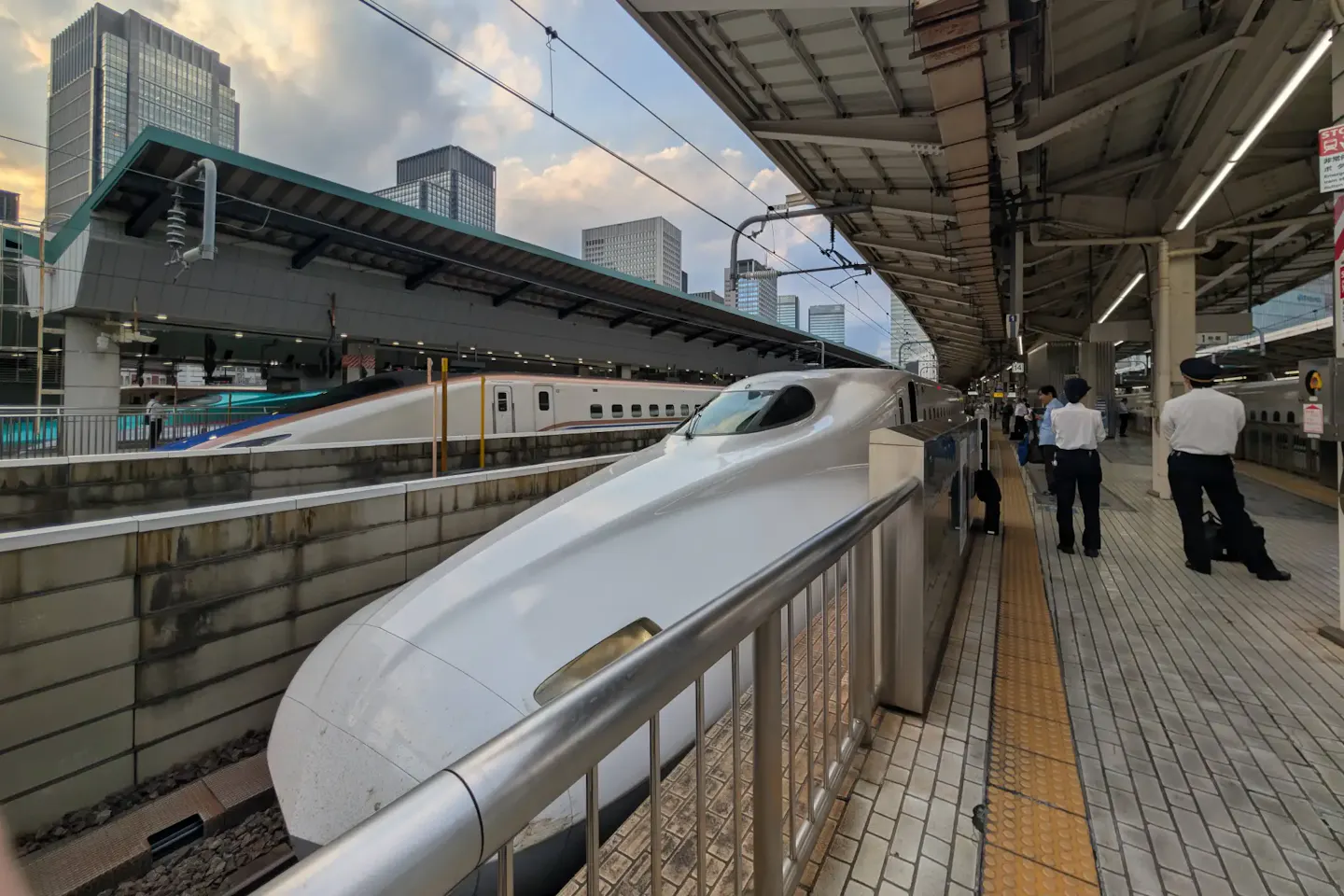
Tokyo Station can feel complicated at first, but boarding the Shinkansen becomes much easier once you know where to go.
This guide shows you how to reach the correct Shinkansen gate, find your platform and car position, and board your train with confidence.
Tokyo also has Shinkansen stations at Shinagawa and Ueno. If you're not sure which station is best for your trip, see our guide to choosing a Shinkansen station in Tokyo.

Tokyo Station has two main sides, Marunouchi and Yaesu. All Shinkansen platforms are located on the Yaesu side of the station. The platforms are divided into two main groups, each with its own gate area.
For Nagoya, Kyoto, Shin-Osaka, and Hakata
For Sendai, Kanazawa, Nagano, Niigata, and Shin-Hakodate-Hokuto
The two Shinkansen areas use separate gates. Before entering, check whether your train uses the Tokaido and Sanyo Shinkansen area or the JR East Shinkansen area.
For a complete guide to Tokyo Station, including luggage storage and traveler facilities, see our Tokyo Station Guide.
If you enter from the Yaesu side, you are already on the Shinkansen side of the station. From Marunouchi, enter through a JR gate and cross the station toward Yaesu.
If you arrive by JR local train, stay inside the station and follow the Shinkansen signs to the transfer gate.
When you arrive at Tokyo Station on a JR local line, look for signs marked "Shinkansen." These signs will guide you toward the Shinkansen area.

Take the escalator, stairs, or elevator to the 1st floor. You'll see more Shinkansen signs pointing the way.

You'll arrive at a spacious open area on the 1st floor.

Continue forward, following the signs toward the Shinkansen area.

You'll start to see the Shinkansen area ahead.

As you walk, check that the platform group matches your destination.

At Tokyo Station, Shinkansen platforms are divided into two main groups:
Keep following the signs until you reach the Shinkansen transfer gates.

If you still need to collect your Shinkansen ticket, do so before going through the transfer gate.

Insert your ticket into the gate. If you have separate basic fare and Shinkansen tickets, insert them together.

Remember to take your ticket as you pass through. You'll need it again during your journey. If you need help, station staff are usually nearby. See our ticketing guide to learn which tickets you need for the Shinkansen and how to use the ticket machines.
Once you're through the gate, you're inside the Shinkansen area.
If you're coming from outside Tokyo Station, the Yaesu side is the most direct side for reaching the Shinkansen.

For the Tokaido and Sanyo Shinkansen, you can enter directly through the Shinkansen gates on the Yaesu side. You do not need to go through the regular JR ticket gates first.
The direct Shinkansen gates on the Yaesu side are the Yaesu North Gate, Yaesu Central North Gate, Yaesu Central South Gate, and Yaesu South Gate.
Have your Shinkansen ticket ready before you reach the gate. Check the gate name before entering to avoid backtracking.
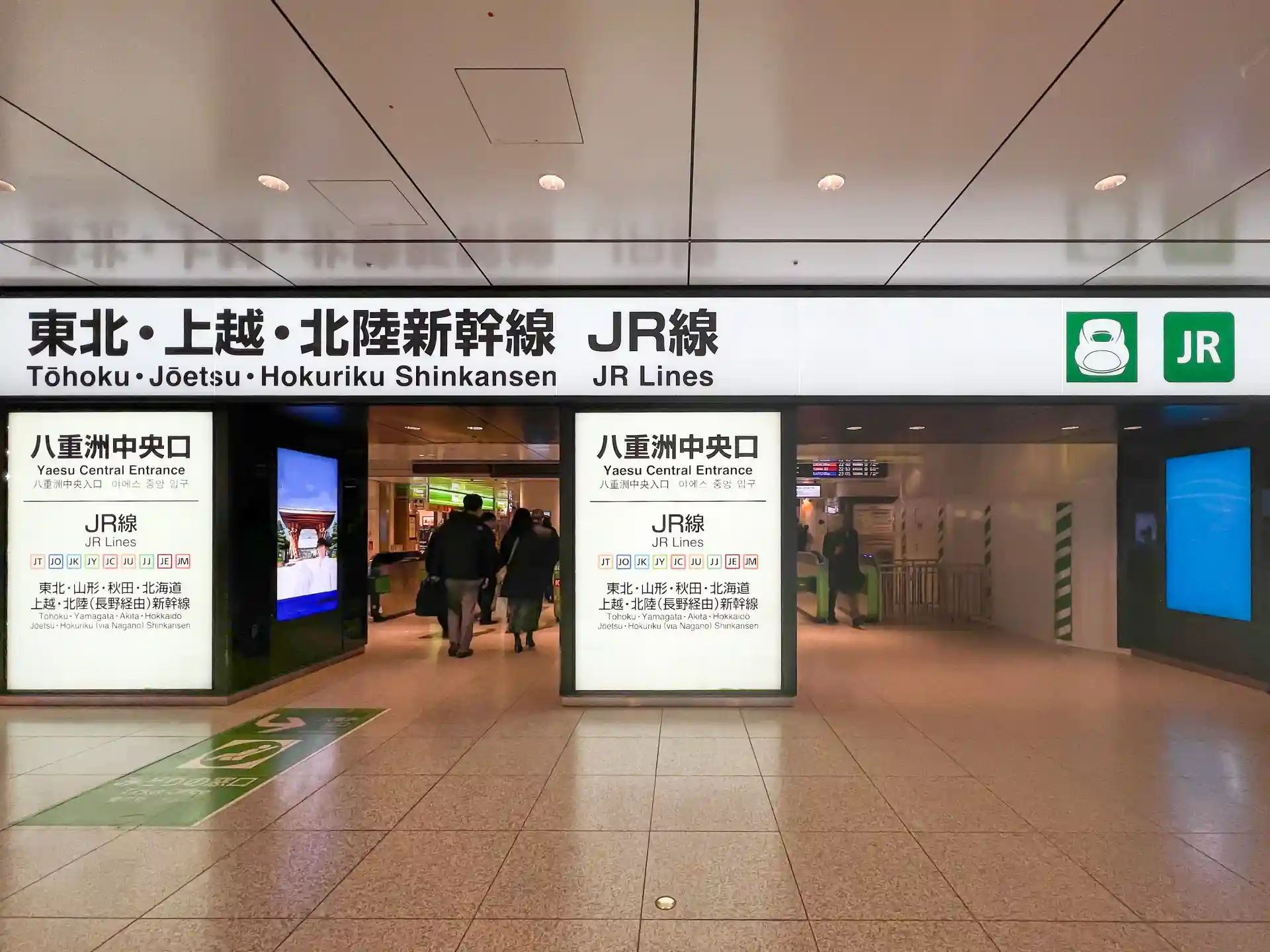
JR East Shinkansen services include the Tohoku, Joetsu, and Hokuriku Shinkansen. From the Yaesu side, enter through a regular JR ticket gate first. The Yaesu Central Gate is a convenient choice because it is located between the North and South Shinkansen Transfer Gates.
After entering the JR area, follow the Shinkansen signs to either the North Transfer Gate or South Transfer Gate. Both provide access to the JR East Shinkansen area.
Have your Shinkansen ticket ready when you reach the transfer gate. The JR East Shinkansen area is separate from the Tokaido and Sanyo Shinkansen area.
The Marunouchi side is on the opposite side of the station from the Shinkansen platforms, but you can still enter from there.
Enter the station through a Marunouchi entrance.

Go through the regular JR ticket gates.
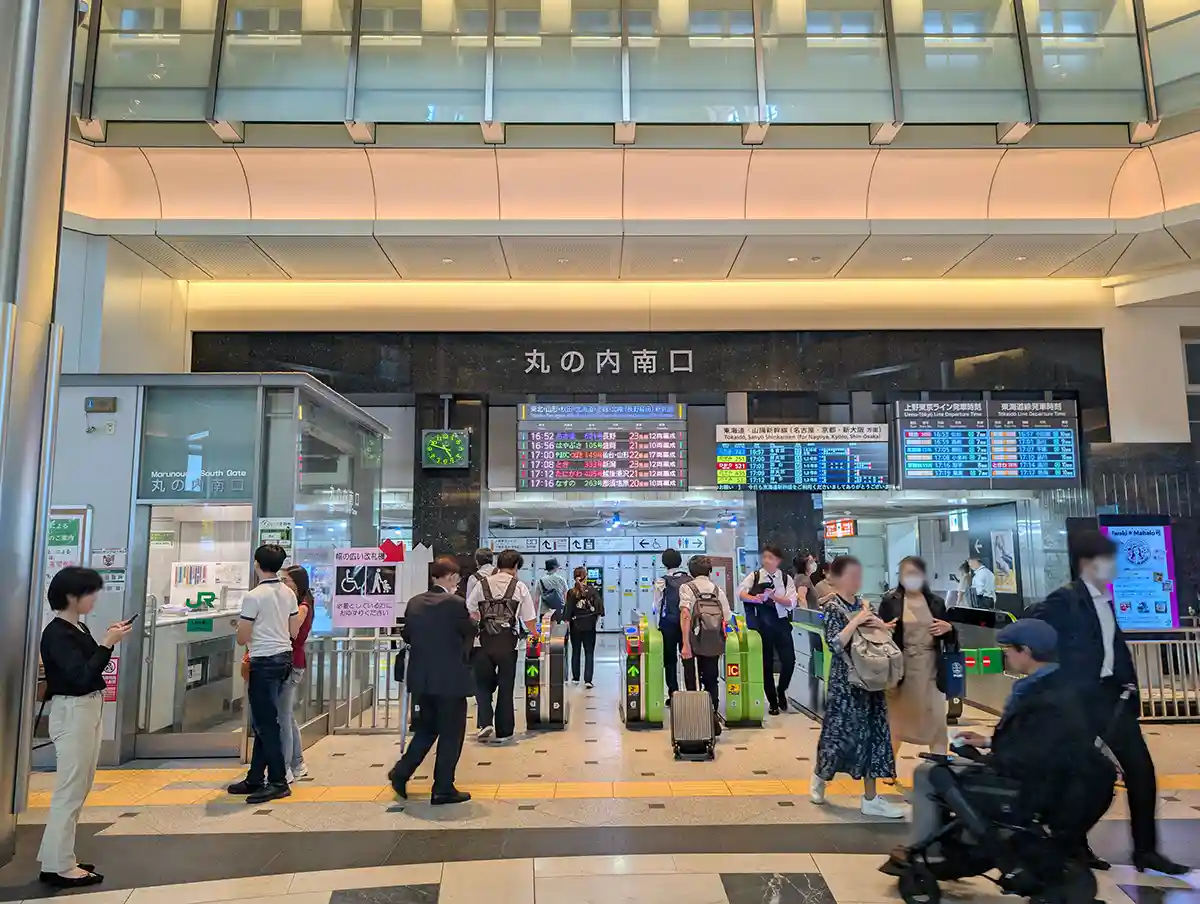
Follow the Signs to the Shinkansen Transfer Gate
Follow the signs inside the station toward the Shinkansen area.
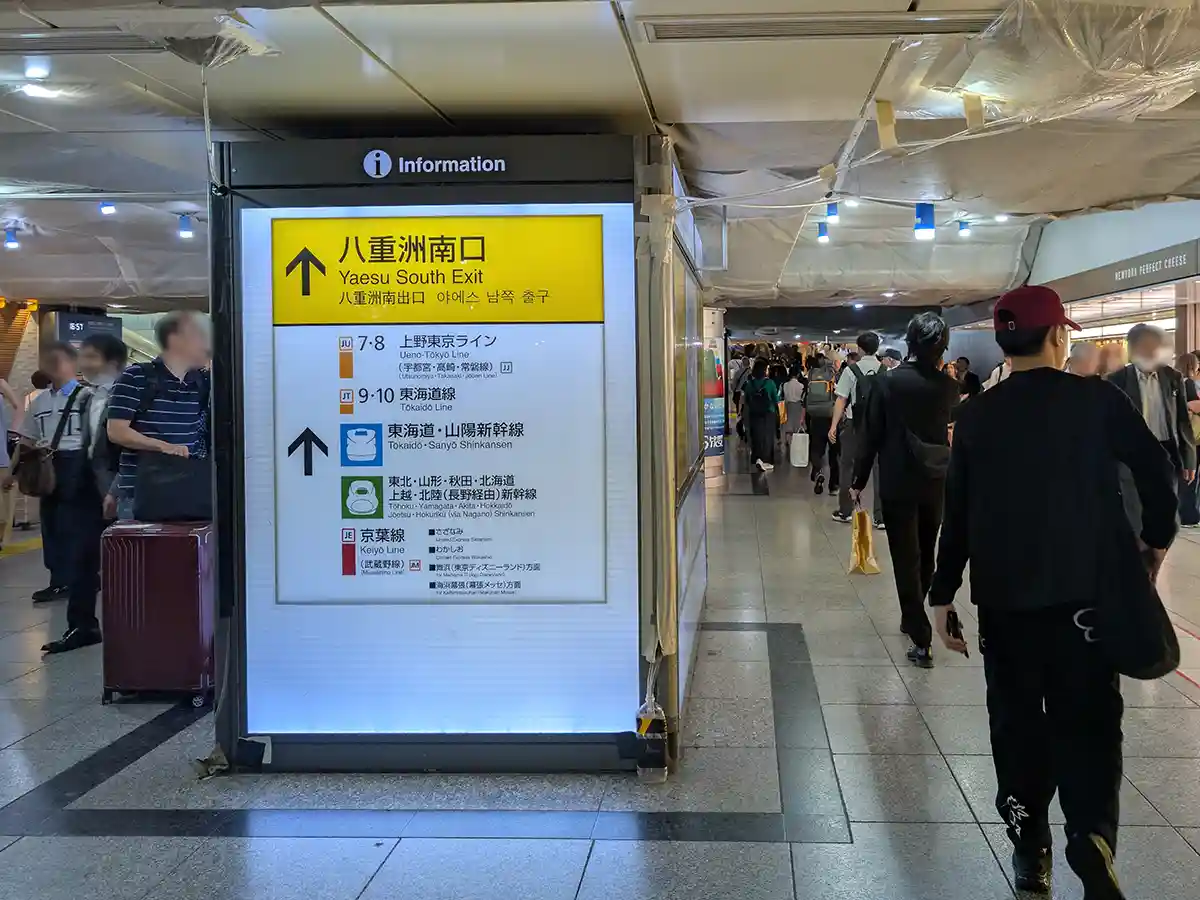
This route typically takes 5 to 10 minutes longer than entering from the Yaesu side. Allow for the extra walking time, especially if your train departs soon. Otherwise, you may feel rushed before departure.
Once you're inside the Shinkansen area, check the departure board for your train and platform number before heading up to the platform.
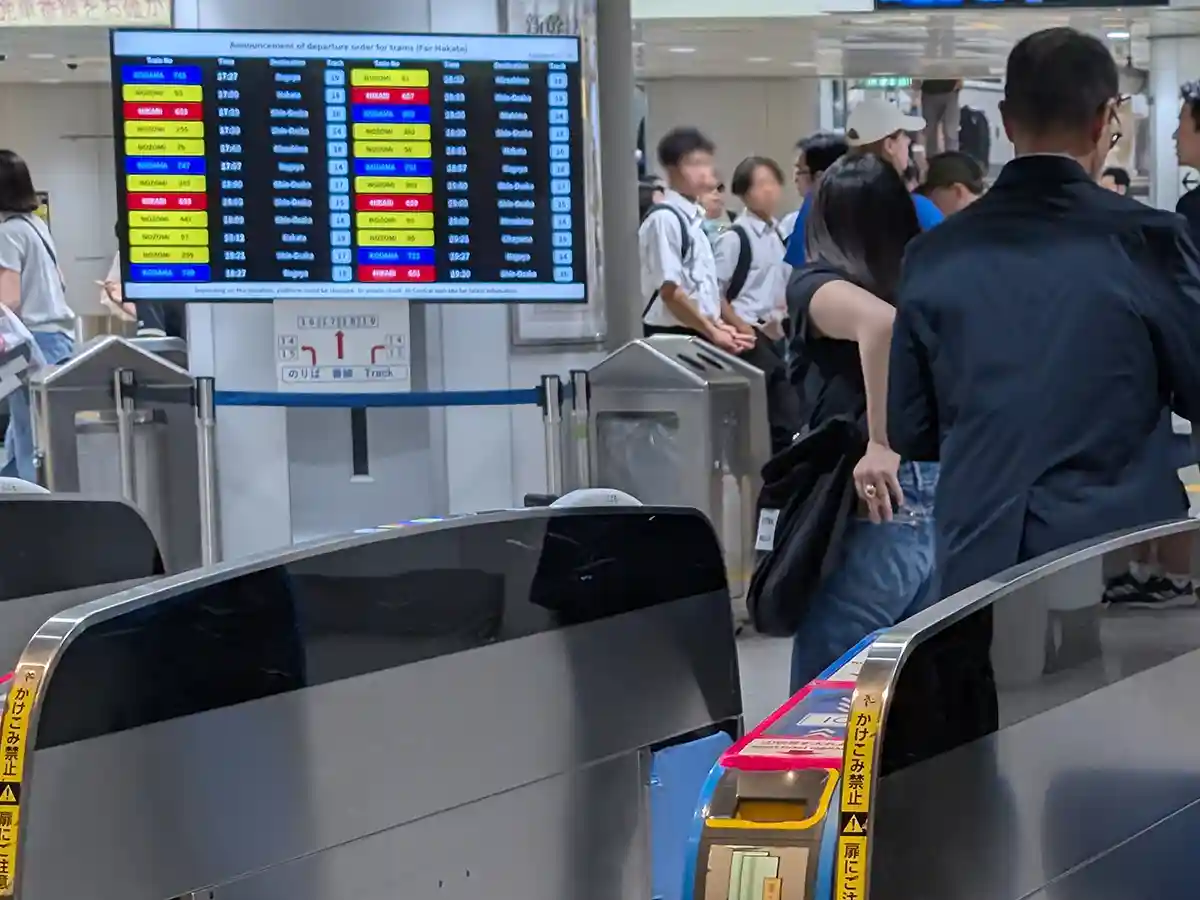
Take the escalator up to your platform.

You can also check your train and departure time on the departure boards on the platform.

If you're not sure how to read your ticket or the departure board, see our Boarding Guide.
Shinkansen trains are long, so the platforms are long too. Allow time to walk to your car position, and give yourself a few extra minutes if you're carrying luggage.
Check the car number printed on your ticket. Then find the matching car-position sign on the platform.

If you're traveling with oversized luggage, the rules depend on the Shinkansen service. On the Tokaido and Sanyo Shinkansen, you may need to reserve a seat with space for oversized baggage in advance. JR East Shinkansen services follow different rules.
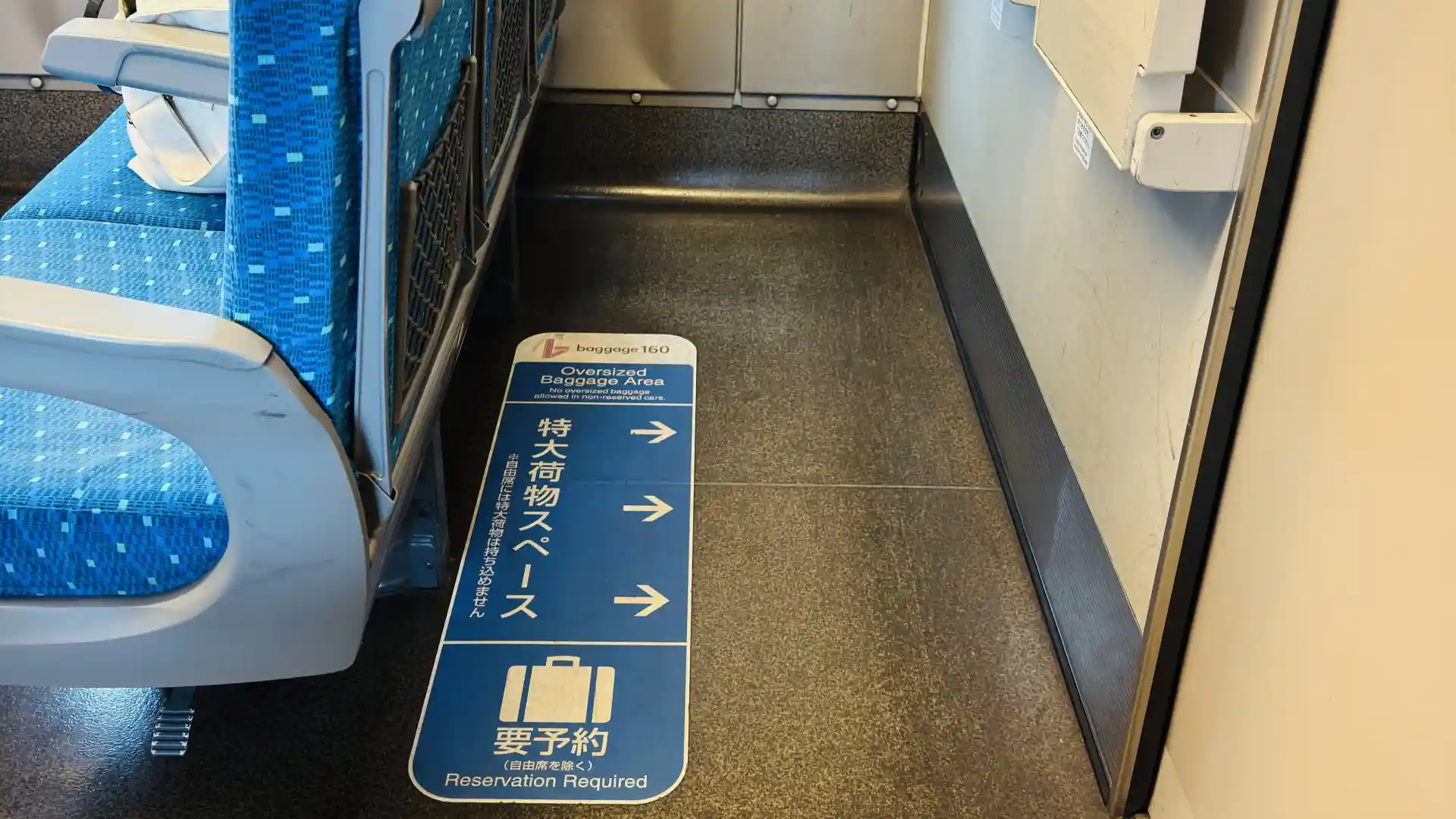
Check the rules before booking. See our oversized luggage guide for details.
On many trains with non-reserved seats, these cars are toward the lower-numbered end of the train, often starting with Car 1. Check which cars are non-reserved for your train, then line up at the boarding position for that car.
During busy periods, queues for non-reserved cars can be long. Arriving early can improve your chances of finding a seat.

If one non-reserved car is full, another non-reserved car may still have seats available.
If you're not sure whether to choose a reserved or non-reserved seat, see our reserved vs non-reserved seats guide.
You now know the basic steps for boarding the Shinkansen at Tokyo Station, from entering the correct area to finding your platform and car position. With these steps in mind, you can navigate the station and board your train with confidence.
When you're ready to book, Japan Bullet Train lets you book Shinkansen tickets online before your trip and collect your paper ticket at the station. This can save you time and reduce stress on your travel day.
If you have any questions, feel free to contact us. Japan Bullet Train is designed for international travelers visiting Japan, with a multilingual website and our Japan-based customer support team available in English, Chinese, Korean, and other languages.